Litter box aversion. Aggression. Inappropriate scratching or destructive behavior. Eating or chewing non-food materials. Cat carrier avoidance. Separation anxiety. Other fears and phobias. When your cat develops a behavior problem, you may need professional advice.
But who should you call? Your veterinarian should be first on the list. But for particularly difficult problems, he or she may enlist the help of a certified applied animal behaviorist or a board certified veterinary behaviorist.While either one can help you solve your cats adjustment difficulty, there are some differences in the services each provides.
Certified Applied Animal Behaviorists
Animal behaviorists work in a variety of capacities, assisting farmers, designing zoo habitats, protecting threatened species, expanding the knowledge of human physiology and psychology, studying animals in laboratories and treating pets with behavior problems. Unlike veterinary medical practice, treating animal behavior problems requires no license. Because of its unregulated nature, the Animal Behavior Society (ABS), formed in 1964, began a program in 1986 to certify that animal behaviorists meet specific standards of education, experience and ethics.
Applied animal behaviorists are not simply animal trainers. Becoming certified in the field requires a rigorous program of education, practice and publication. Certified applied animal behaviorists must possess doctoral degrees in a related profession, five years professional experience, a two-year residency in animal behavior, experience working with a particular species, submission of case studies, publication and three letters of recommendation.
Applied animal behaviorists must follow ethical guidelines determined by the ABS. Certified behaviorists are bound by a set of ethics that guide our behavior with clients and animals, says John Wright, PhD, a certified applied animal behaviorist and author (along with Judi Wright Lashnits) of Aint Misbehavin: The Groundbreaking Program for Happy, Well-Behaved Pets and Their People. A certified applied animal behaviorist can be decertified if the guidelines are not met.
Certification, once attained, does not last a lifetime. An applied animal behaviorist must reapply every five years, says Dr. Wright, and re-meet the criteria for certification, one of which is active involvement in scholarly activities, such as teaching or research.
288
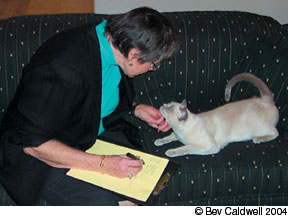
Determining the cause of an animal behavior problem involves an analysis of the pet, the pets environment and the interactions between the pet and the family. A behavior problem may have a particular cause in one home and a different cause in another, so it is often necessary to see the animal in the environment in which he or she lives. Solving the problem requires working with the pets human family as well as the animal.
To find a certified applied animal behaviorist, log onto the ABS website (see sidebar). Currently, there are only 41 practitioners listed, but some may be willing to work with a client on the telephone or consult with the clients veterinarian. Although a certified applied animal behaviorist cannot prescribe medications, he or she will work with the veterinarian if medication is required. What we do that is different may involve our own perspective of how to assess behavior and establish a program of humane change, says Dr. Wright. If we need to use drugs as a tool, we consult the referring veterinarian who would prescribe the drug.
Before embarking on a program of behavior modification, you need to have your cat examined by a veterinarian to determine if underlying medical problems might be causing the problem or affect its solution.
Board Certified Veterinary Behaviorists
Veterinary behaviorists must first have a veterinary degree and a license to practice veterinary medicine. Animal behavior is recognized as a specialty by the American Board of Veterinary Specialists, and board certification in veterinary behavior is governed by the American College of Veterinary Behaviorists (ACVB). Its a relatively new specialty, says Katherine Houpt, VMD, PhD, who is board certified by the American College of Veterinary Behaviorists as well as being certified by the ABS as an applied animal behaviorist.
To become board certified, veterinarians must complete a conforming residency program approved by the American College of Veterinary Behaviorists or find an ACBV diplomate to serve as a mentor for an approved non-conforming residency. Residents must manage a supervised behavior caseload, publish at least one scientific paper, write three case reports and pass a two-day examination. Board certification requires a veterinary doctoral degree (DVM or VMD) but does not require a PhD.
A veterinary behaviorist will be familiar with the animals health history and be able to look first for physical causes to the behavior problem. A veterinary behaviorist is more familiar with drugs and the organs that metabolize drugs, says Dr. Houpt.
Because it is a violation of state licensing laws to do primary consultations with animal owners by phone, fax or E-mail without having seen the animal, the ACVB website (see sidebar) lists board certified veterinary behaviorists as a resource for veterinarians to contact. As of this writing, there are only 36 diplomates. It has only been a specialty board for eleven years, explains Dr. Houpt, who recommends starting by consulting with the pets veterinarian, who can refer an owner to a behavior specialist.
The Best of Both Worlds
Like Dr. Houpt, about half of the certified applied behaviorists are also veterinarians. Board certified veterinarians who are also certified by the Animal Behavior Society represent the best of both worlds, says Dr. Wright.
Solving your cats behavior problem ensures that your cat remains a valued member of your household. Most cat behavior problems are solvable, says Dr. Houpt, and cats should not be euthanized because of them.