Q: We’ve recently noticed that our 8-year-old female domestic short-haired cat has experienced a decreased appetite despite our efforts to tempt her with various wet and dry foods. She has lost a small amount of weight, and we are nervous that something may be going on with her health. Can you provide any clues as to what might be causing this?

A: Thank you for contacting us, and I am sorry to hear about your cat’s diminished appetite, technically referred to as hyporexia. This is one of the most common problems reported to veterinarians by cat owners, and potential causes range from relatively benign to serious in nature. Perhaps a few points would be helpful.
The first is that the mere fact that a cat is not eating, regardless of cause, constitutes a potential problem. When cats don’t eat for as short a period as two days, they can develop a condition called hepatic lipidosis. This occurs because when cats don’t eat, they experience a significant mobilization of fat stores that ultimately results in fat deposition in the cells of the liver, leading to compromised liver function. Hepatic lipidosis is potentially life-threatening, so it is important that you contact your veterinarian if your cat does not eat for more than one day.
There are a multitude of causes for a cat losing their appetite (see sidebar). And, to complicate the issue even further, cats may just become finicky and develop a preference for certain foods and/or an aversion to others.
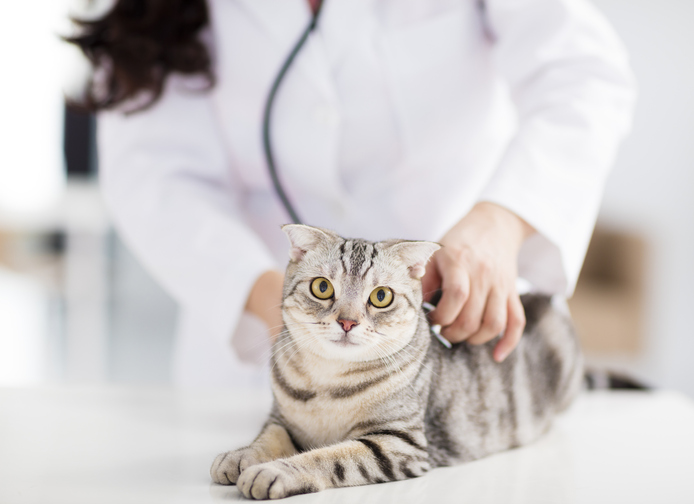
The first thing to do when a cat experiences a decrease in appetite is to rule out medical problems (as listed above) that may be causing it via appropriate history, physical examination, and diagnostic testing, which may include bloodwork, urinalysis, imaging, and, in some cases, microscopic evaluation of aspirates (small samples taken through a needle) and/or biopsy specimens.
If a contributory condition is identified, appropriate therapy is instituted while taking measures to assure that the cat maintains adequate nutrition. This may involve interventions ranging from simply tempting the cat with different foods, slight warming of foods, or the addition of liquids that taste good (i.e., chicken broth) to the use of appetite stimulants. In some cases, the placement of feeding tubes that bypass the oral cavity and go straight to the stomach may be required, at least temporarily.
Finally, if there is a suspected behavioral contribution to a cat’s decreased appetite, consultation with a veterinary behaviorist may be beneficial.
I hope that this is helpful, and please work closely with your veterinarian to determine the cause of the decreased appetite in your kitty so that you can take steps to fully restore her interest in food as soon as possible.