Hip dysplasia is a genetic malformation of the hip joint resulting in abnormal wear and tear on the joint surfaces, ultimately resulting in painful arthritis. While relatively rare in cats compared to dogs, it is more common in purebred cats like the Maine Coon. Obesity makes it worse.
Cats can suffer from other hip problems as well, including avascular (aka aseptic) necrosis of the femoral head (loss of blood supply to the “ball” of the “ball and socket” hip joint), slipped femoral capital physis (dislocation of the growth plate of the “ball”), traumatic fractures and dislocations, and age-related or immune-mediated arthritis.
Diagnosis of hip problems is accomplished with X-rays. This procedure typically requires sedation or anesthesia, as the positioning of the hips required for these X-rays can be uncomfortable, especially if a cat has hip dysplasia/arthritis.
Once a diagnosis has been made, treatment can begin. If possible, fracture repair and reduction/replacement of dislocations is recommended. If hip dysplasia or arthritis is diagnosed, medical or surgical management may be recommended, depending on the severity of disease.
Surgical Treatment
For cats with severe hip luxation, a femoral head and neck ostectomy (FHO) may be recommended. In this procedure, the femoral head and neck are surgically removed. It is often considered a last-ditch effort to relieve pain.
“In cats, FHO is usually performed when trauma or disease has severely affected the hip joint, or when the injury or illness to the hip joint cannot be repaired or medically managed,” says Jan MacDonald, DVM, DACVS, Cornell University College of Veterinary Medicine graduate and board-certified veterinary surgeon.
“For many cats, considering a total hip replacement is not a viable option due to lack of bone stock, financial concerns, or availability,” says Dr. MacDonald. “Surgical excision of the femoral head and neck can relieve pain (by eliminating bone-on-bone contact) and result in return to full activity in three to four months. While there is no reconstruction of the cat’s hip joint, most cats will be able to run and jump, using the supporting muscles to allow the leg to support weight. This procedure carries a good prognosis for pain relief and a return to normal activities in most cases.”
Medical Management
Medical management is recommended for cats who do not need surgery yet or are not surgical candidates for whatever reason. Pain control for these cats starts with weight management. Obesity puts more stress and pressure on the hips and makes everything worse. If your cat is suffering from hip pain and is overweight, work with your veterinarian to establish a safe and effective weight loss program.
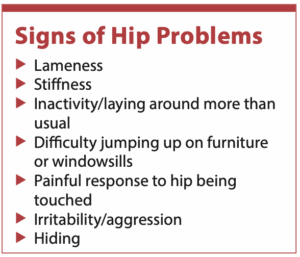
Joint supplements can help, especially when started early in the joint disease progression. Suggestions (some of which are controversial) for you to discuss with your veterinarian include:
- Glucosamine/chondroitin (anecdotally helps some cats with joint pain)
- Fish oil (omega-3 fatty acids have anti-inflammatory effects on the joints and help slow the destruction of cartilage)
- Undenatured collagen Type 2 (in a general sense, it tricks the immune system into stopping its attack on damaged cartilage)
- Green-lipped mussel (source for several ingredients beneficial to joints)
- Microlactin (a milk protein that has anti-inflammatory properties)
If the thought of trying to get your cat to eat these things makes you shudder, talk to your veterinarian about starting a prescription veterinary diet formulated for maintaining healthy joints. These diets are typically rich in ingredients like omega-3 fatty acids, which may help reduce inflammation and promote healthy cartilage.
Another medical management option to discuss with your veterinarian is Adequan. This is an injectable product containing polysulfated glycosaminoglycan (PSGAG), another ingredient shown to support joint health. In cats, its use is extra-label. Many veterinarians, however, recommend it for arthritic cats and report improvement in the overall comfort and mobility of their patients.
Your veterinarian may prescribe pain medications for your cat, depending on your cat’s overall health status and degree of pain. These include non-steroidal anti-inflammatory drugs (NSAIDs), opioids, and gabapentin.
Finally, the newest kid on the block for medical management of arthritis pain is Solensia. This is an injectable medication administered once a month. It is monoclonal antibody targeting nerve growth factor (NGF), a main player in the perception of joint pain.
While it doesn’t slow the progression of arthritis, by simply providing pain relief it can dramatically improve your cat’s comfort, mobility, and overall quality of life.
With so many options for cats with painful hips, no cat should have to suffer and miss out on the fun things in life. Talk to your veterinarian.