Q: The veterinarian that I’ve been using for my cats over the last 20 years retired early last year. He was a cats-only veterinarian. During annual examinations, he would scrape the cats’ teeth with a tool to remove plaque.
Our new veterinarian doesn’t do this because she said it isn’t the current recommended practice. Instead, she said they put cats under anesthesia to do teeth cleaning. I’m concerned, however, about putting my Wally under anesthesia because he is 14 years old. Please advise.
A: Thanks for getting in touch with this excellent question, and I very much understand your concern regarding the use of anesthesia to address dental disease in cats.
While it is natural for us to wonder why this is recommended for cats when it is not used as commonly in treating human dental disease, the global dental guidelines of the World Small Animal Veterinary Association recommend the routine use of anesthesia for the diagnosis and treatment of most feline dental diseases for several reasons that I will briefly review.
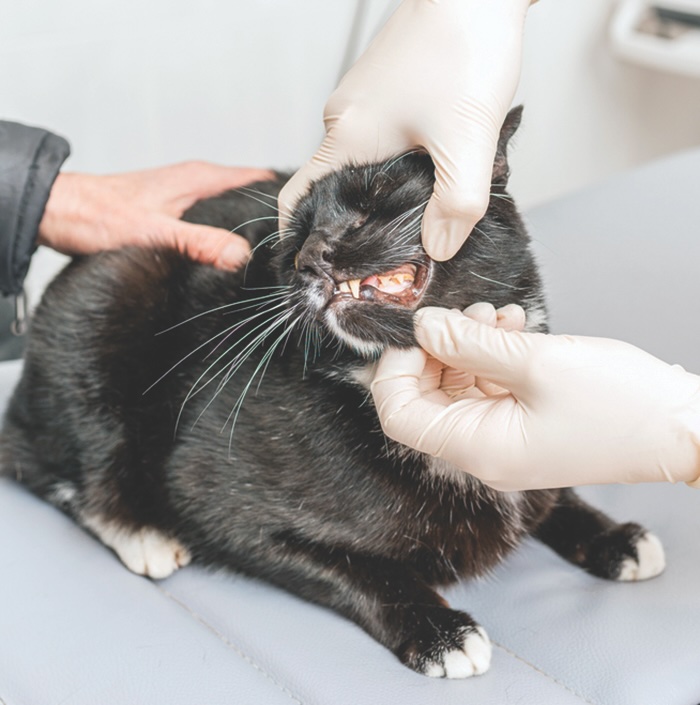
The first step in evaluating a cat’s dental health is an awake oral examination, during which the veterinarian will lift the lips and open the mouth to the extent that the awake cat will allow to visually evaluate the teeth, gums, palate, and periodontal structures in the mouth.
While some cats will allow a fairly good look at their mouths during this initial examination, many, if not most, will not tolerate sufficient manipulation of their mouths to allow a full evaluation of structures in the oral cavity that can be seen with the naked eye.
From a diagnostic standpoint, this is a major concern, as disease processes ranging from mild to potentially life-threatening can be missed.
Even if a cat allows a complete awake oral examination, though, there are diseases that cannot be seen with the naked eye that require further diagnostics (i.e., dental probing, X-rays) that awake cats will not tolerate. Anesthesia allows these important diagnostic and therapeutic steps to be taken and minimizes the stress that cats may experience if they are attempted without anesthesia.
Regarding the safety of anesthesia, this discipline has evolved tremendously over the past 30 years or so. With appropriate screening, anesthetic planning, and monitoring, the incidence of anesthetic complications for elective anesthesia in cats is quite low.
Importantly, of course, this risk will never be zero, but as with all medical interventions, decisions are best made by considering both the risks and benefits of a proposed intervention. In Wally’s case, for example, the question is whether the risk of elective anesthesia outweighs the potential benefit of the full diagnostic and therapeutic dental plan (including dental prophylaxis like scaling) that can be facilitated by anesthesia.
In an otherwise healthy 14-year-old cat (which is a senior cat, but not THAT old!), the answer to this question is usually “no.”
I hope this is helpful. Please discuss these important issues carefully with your veterinarian to assure best care for Wally and comfort for you.