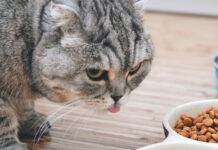
Of course, cats can eat raw meat. After all, a freshly caught mouse is raw. But eating fresh prey and being served raw meat are not the same.
When your cat eats a mouse, she tends to consume virtually the whole mouse, not just the muscle meat. This is important. Simply feeding your cat raw chicken wings will not give her a balanced diet. Cats are obligate carnivores, but they do eat some carbohydrates as well. A pure meat diet is high in phosphorus and low in calcium. A number of essential amino acids, vitamins, and minerals are missing in a “pure meat” diet.
“Usually, if the entire animal is eaten, then the nutrient deficiencies are minimal to non-existent. Most people feeding cats raw diets provide just the meat and not the bones or innards, which is where folks get into trouble,” says Joseph Wakshlag, DVM, PhD, professor, sections of Clinical Nutrition and Sports Medicine and Rehabilitation at Cornell University’s College of Veterinary Medicine.
The other factor to consider is that when cats eat small animals they prey upon, they usually do this immediately after they kill their prey. This is a very different situation than feeding raw diets that are composed of meat and other ingredients that have been stored for variable periods of time, as storage can promote the growth of bacteria and other pathogens.
Commercial Raw Foods
Many companies are making raw meat foods for cats. If you are considering feeding raw, you must truly understand what you are purchasing. Some foods are basically frozen meat only. You will need to add vitamins, minerals, and, in most cases, taurine and other supplements to these diets to keep your cat healthy.
You may find frozen raw meat diets that are nutritionally complete and balanced for cats. Always check for the American Association of Feed Control Officials (AAFCO) Nutritional Standards label, especially if the food is labeled for kittens, as kitten nutritional requirements differ from adult cats.
There are also freeze-dried and dehydrated raw meat diets that may or may not be complete and balanced. You must look for and read that AAFCO statement carefully to be sure the diet is adequate for the life stage of your cat. If you don’t find an AAFCO statement on the food, it is best to pass on that product.
Processing Matters
Processing affects food quality and food safety. Freezing, freeze-drying (removing moisture), and dehydrating all influence nutritional quality to some extent and vary in the degree of food safety such as reduction in bacteria like Salmonella. Commercial high pressure pasteurized (HPP) processing will kill off many (but perhaps not all) bacteria without influencing nutritional quality, but these foods tend to be expensive and hard to find.
Potential Advantages to Raw
Feeding a raw diet has a few theoretical advantages, but it is important to note that there is no evidence that feeding raw diets to cats provides any definitive health benefits when compared to feeding nutritionally complete and balanced cooked diets. Raw foods usually don’t have any potentially harmful compounds added via processing (like nitrosamines in bacon as an example). Some nutritionists believe foods have better bioavailability and synergy when fed raw, and raw-fed foods may also have more antioxidants.
Feeding raw food may help cats with food allergies or reactions to preservatives. Generally, these foods have limited ingredients, so it is easier to track any reactions.
Drawbacks of a Raw Diet
The big concerns with feeding a raw diet are nutritional balance, cost, and safety.
As mentioned, a cat fed strictly muscle meat will be nutritionally deficient in many areas, possibly to the point of causing serious illness or death. That is why it is so important to read labels carefully. Is the commercial raw diet complete and balanced, or does the manufacturer recommend supplements? If it says complete, does that include for all life stages?
Most raw diets contain only meat and vegetables. That means you will usually need to add a custom set of vitamins and minerals to balance the diet. The calcium to phosphorus ratio is particularly important and should be about 1:1 for adult cats. The gold standard for evaluating diets is AAFCO feeding trials, but most nutritionists accept the statement that the food is meeting published AAFCO nutritional standards (the label we mentioned). Feeding trials are difficult to carry out, especially for smaller companies.
Homemade Raw
Feeding your cat raw food can be expensive. You need to purchase quality ingredients, and cutting corners here could lead to serious health problems.
If you are considering doing this at home, you should consult a veterinary nutritionist to develop a complete and balanced recipe for your cat. An added bonus is that the nutritionist can come up with a customized recipe just for your cat, taking into account things like diseases your cat may be suffering from and flavor preferences.
One of the biggest concerns is food safety and hygiene, for your cat and the humans in your home. A family with infants, elderly members, anyone with chronic health conditions, and anyone who is immunocompromised should avoid feeding raw foods to their cats, and the same concerns apply to elderly, very young, and immunocompromised cats.
Bottom Line
Raw diets are a controversial issue in the health management of cats. Since there is no scientific evidence, though, that raw diets provide health benefits when compared to cooked diets—and since they are associated with the risk of exposure of both cats and their owners to pathogens including E coli, Salmonella, or Listeria—it is probably best to avoid feeding raw diets to cats unless future research demonstrates that they provide health benefits when compared to nutritionally complete and balanced cooked cat foods.