Over 80% of the hypertension (high blood pressure) cases in cats are secondary, meaning there is a primary problem causing the high blood pressure.
Among the most common feline diseases that can cause hypertension are chronic kidney disease (CKD) and hyperthyroidism. Less common causes include some adrenal conditions, including adrenal cancer (pheochromocytoma). Obesity may be a contributing factor. Most cats diagnosed with hypertension are seniors.
Signs of High Blood Pressure
Sadly, the first sign of feline hypertension is often a sudden onset of blindness due to retinal detachment. If caught early, some vision may be saved, but this is not usually the case.
Up to 40% of cats with hypertension exhibit neurological problems like weakness or slight disorientation. Ataxia (incoordination), behavior changes, or seizures are often reported. Some owners report nosebleeds and blood in the urine. Many of these signs are reversible if the hypertension is caught early and successfully treated.
Your veterinarian may detect a heart murmur on your cat’s physical exam due to the added work of the heart. This added work may cause thickening of the left ventricle of the heart, a condition that is potentially reversible if the hypertension is successfully treated.
About 60% of cats with hypertension have some evidence of CKD, and this may manifest as an elevation of waste products that are normally removed from the bloodstream by the kidneys on bloodwork (called azotemia) and/or as loss of protein in the urine that can be picked up on routine urinalysis.
A complete blood panel to evaluate renal function and a thyroid panel to screen for hyperthyroidism are routinely recommended as part of a wellness plan for older cats and should be performed in any cat diagnosed with hypertension. Additionally, your cat should have her eyes examined at each veterinary visit since the retina is one of the “target organs” that may be damaged by high blood pressure.
Diagnosing Hypertension
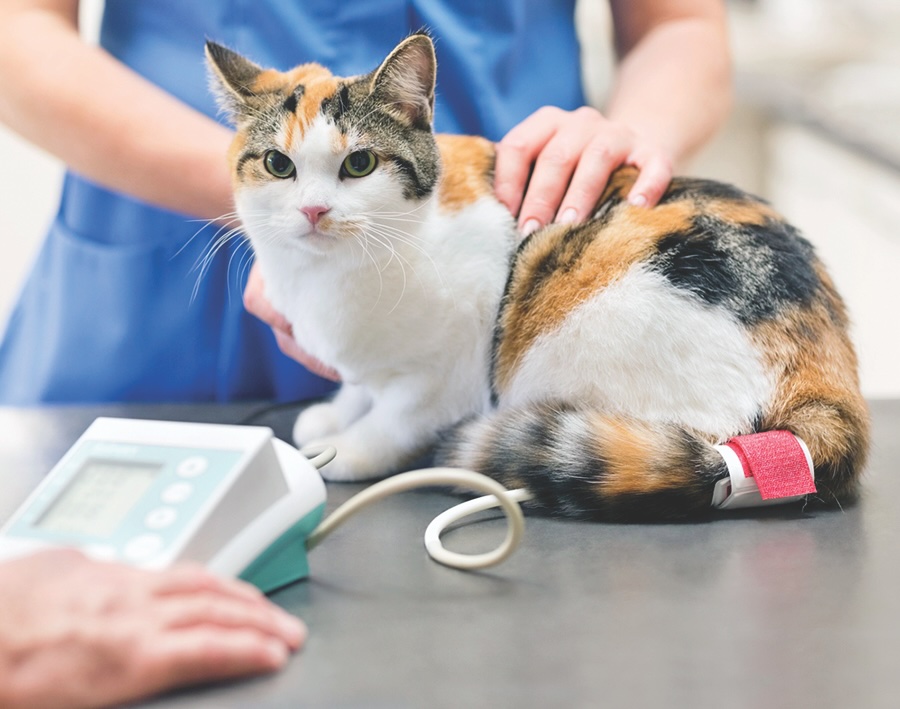
Feline blood pressure is most commonly measured using an inflatable cuff that is similar to that used when measuring blood pressure in people. Just as with people who experience a “white coat” response during which their blood pressure rises because they’re in a medical office, many cats experience transient elevations in blood pressure due to the stress of being in the clinic.
These temporarily elevated readings do not indicate hypertension. To address this issue, cats are allowed to relax for a while in the clinic setting, and readings may be repeated after this relaxation to see if they remain consistent or appear to become temporarily elevated in response to stress.
The systolic blood pressure (reading of the pressure in arteries when the heart contracts) is the most reliable and repeatable measure of blood pressure in cats. A systolic blood pressure over 160 mmHg (millimeters of mercury, the standard measurement of blood pressure) is considered high in cats.
Treatment
If a primary cause of feline hypertension is found, treatment for this problem is addressed first. In the interim, the most well-established treatment for hypertension itself is a calcium channel blocker called amlodipine. This medication comes in a pill form and is usually given once a day.
If pilling your cat is challenging and stressful, there are compounded transdermal versions of the medication, meaning you can rub the prescribed amount on the inside of the cat’s ear. Compounded liquid options may also be available. Talk with your veterinarian. Other potential therapies include angiotensin-converting enzyme inhibitors like enalapril and the angiotensin receptor blocker telmisartan.
While therapeutic diets have not been well established for helping to treat feline hypertension directly, your veterinarian may recommend some adjustments to your cat’s diet, such as sodium restriction. A weight-loss diet/program may be recommended if an affected cat is overweight, and special diets may be recommended to manage CKD if identified.
Vital Rechecks
During early treatment, your cat should have periodic rechecks to make sure any antihypertensive medications are working and causative diseases like CKD and/or hyperthyroidism are being well managed. Initially, this may be as frequent as monthly, but once your cat’s blood pressure is stabilized, every six months may suffice.

Damage already done to target organs may not be reversed despite therapy, but treatment will help prevent future injury and slow disease progression. Luckily, for most cats, hypertension is manageable with appropriate medication and dedicated owners.