Mastitis is an inflammation and/or infection of the mammary glands that usually occurs due to an injury.
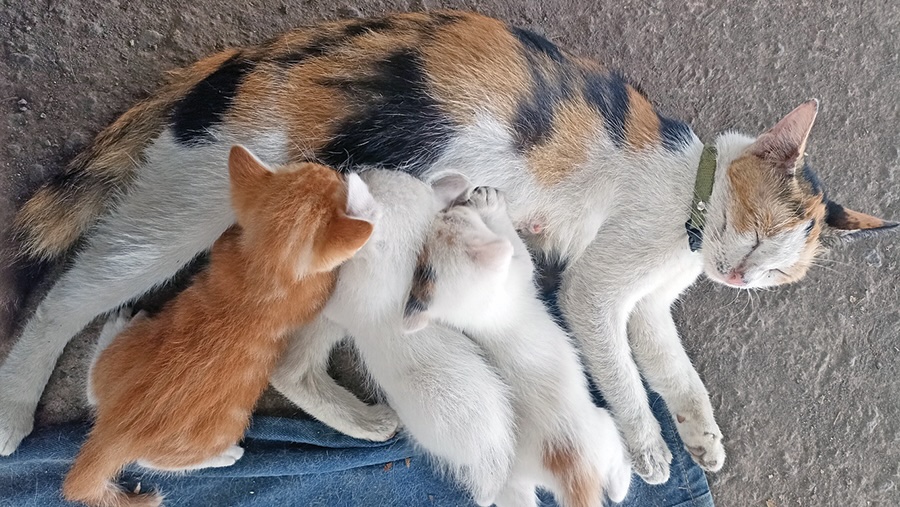
“I have rarely seen a lactating queen develop mastitis. When that occurs, we usually remove the kittens and give them to a foster lactating queen,” says Leni Kaplan DVM, senior lecturer in the Community Practice Service at Cornell University’s College of Veterinary Medicine. Luckily, there are usually foster females available, and female cats are notoriously accepting of foster babies, even those of other species such as rabbits and squirrels.
Mastitis Prevention
Mastitis usually occurs after trauma to the mammary glands or due to infection moving up the nipples from the outside world. The ideal goal is to prevent mastitis, and you can help by trimming the nails of nursing kittens frequently so they do not scratch their queen when “treading” as they nurse. Such scratches can open pathways for bacteria to enter the mammary glands, especially after the kittens have been in the litterbox.
Mastitis can also develop if milk builds up in the glands due to sudden weaning of a litter or death of kittens when the queen is still producing milk.
Signs of Mastitis
The first signs of mastitis may be a reluctance of the kittens to nurse. The milk may be foul, or the queen may be uncomfortable when the kittens nurse, so she moves away. You may notice the mammary glands becoming red, unusually warm and painful to the touch, and hard (as opposed to the normal firmness of lactating mammary glands). Instead of normal milk, there may be a purulent (pus-like) discharge or clumps of clotted milk. The milk may be thick or have blood in it.
 If not treated, affected mammary glands may ulcerate (break open), and at this point, the queen will usually be obviously ill. She may have a fever, be lethargic, and not eat or drink as she normally would.
If this occurs, your cat will need to be seen by a veterinarian promptly. Antibiotics, fluids, and pain medications will often be prescribed in these cases. If possible, she should be returned to her kittens, and the affected glands can be bandaged to prevent further trauma while they heal.
Home Treatment
Mild cases of feline mastitis can often be treated at home. Dr. Kaplan recommends warm compresses for the affected glands and using raw cabbage leaves to wrap them. Kittens can still be allowed to nurse but should be kept from nursing on the affected glands by bandaging them until they heal.
Why raw cabbage leaves? While the anti-inflammatory properties of cabbage have not been definitively worked out, they are effective at minimizing inflammation in cases of feline mastitis. You should use fresh cabbage and wash and dry the leaves before wrapping them over the affected glands. Recommended protocols vary in how long to leave the wrap in place, but two hours should be plenty.
A female cat who has had mastitis may not get it again, but since it is an unusual problem to begin with, spaying once the litter is weaned is recommended. This is particularly true for catteries that don’t want to pass on a predisposition to this problem.
Mammary Hyperplasia
Feline mastitis may occur with a condition called mammary hyperplasia. “Most of my experience with mastitis in cats is with non-lactating queens that develop mammary gland hyperplasia, in which case we try to get them spayed ASAP,” says Dr. Kaplan.
Mammary hyperplasia is a benign condition characterized by dramatic enlargement of the mammary glands. Technically, it is called “fibroadenomatous hyperplasia” and is usually noted in young cats. It usually comes on quickly and may occur in pregnant female cats, nonpregnant, spayed female cats, and even rarely in unspayed female cats or male cats.
This gland development is due to a surge of progesterone, an important reproductive hormone. This could be due to your cat’s natural hormone production, or it could be a side effect of megesterol acetate, a synthetic progesterone used for treatment of a variety of veterinary health conditions. Milk is usually not produced during mammary hyperplasia.
Spaying is the ideal treatment. Surgical removal of the hyperplastic gland is recommended for some cats, especially if the tissue becomes highly inflamed, infected, or ulcerated. Rarely, this condition will clear on its own.
It can be difficult to distinguish mammary hyperplasia from mastitis or mammary cancer, so your veterinarian may suggest a biopsy to distinguish between these conditions.