The American Animal Hospital Association (AAHA) is well known for its excellent guidelines on various aspects of veterinary care for small animals. The latest revised guidelines address fluid therapy.
While a cat’s diet is certainly an important consideration, maintenance of appropriate hydration with fluid therapy is equally important, especially if the cat is ill.
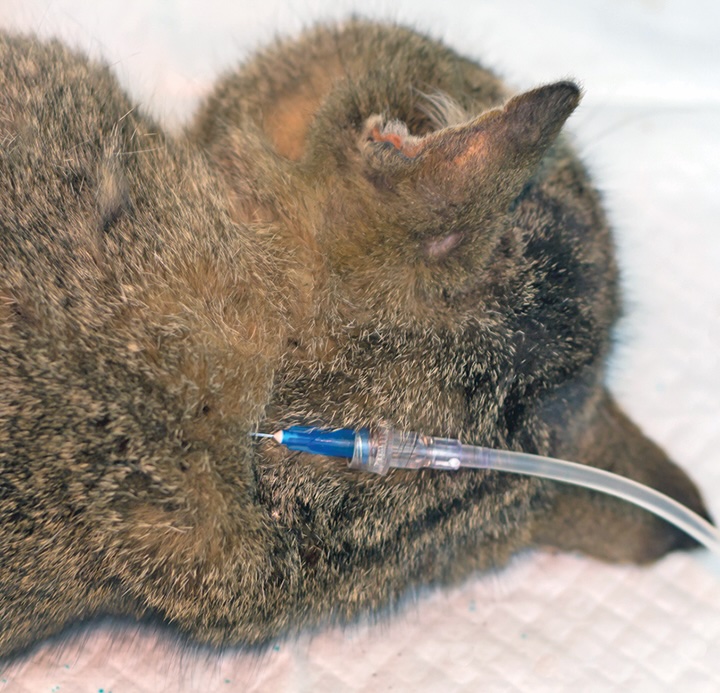
If your cat is very dehydrated, fluids usually will be administered directly into her veins (intravenously, IV), and the veterinary team will determine the best type of fluids and the optimal amount to give. In some cases, IV fluids will be supplemented with electrolytes, vitamins, and/or other drugs, and all patients receiving IV fluid therapy will be carefully monitored to assure that they receive sufficient amounts without overhydrating them.
Intravenous fluids are also commonly used for pets undergoing anesthesia to help maintain blood pressure/flow to assure normal function of vital organs. Pets who became dehydrated in hot weather or have an acute illness often benefit from IV fluids.
Fluids can also be administered under the skin (subcutaneously, SC), and owners of cats diagnosed with some conditions, like chronic kidney disease, can often help their cats by administering SC fluids at home. SC fluids are absorbed slowly, so there is less risk of acutely providing too much fluid, but this is still a possibility, so owners should work carefully with their veterinary team to assure appropriate monitoring if they are asked to administer SC fluids to their cat at home. SC fluids also may be used when access to the veins of a feline patient is not possible.
Your veterinary staff can guide you through the techniques for giving SC fluids. You should follow sterile techniques and keep to the amounts recommended. Your cat may have a fluid-filled mass for a few hours, but the fluids will be absorbed, and the lump will disappear. Clean, fresh drinking water should always be provided to your cat.