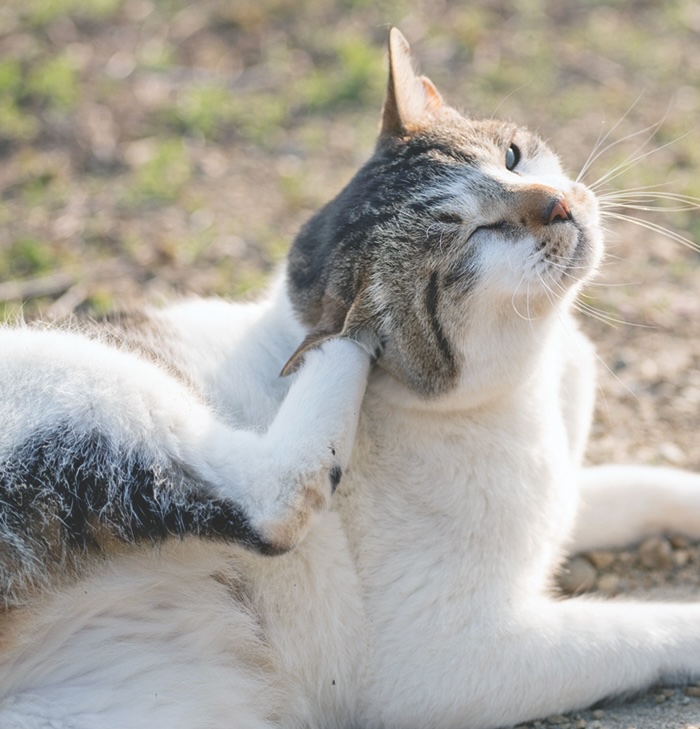
If you notice your cat scratching his ears and/or shaking his head, or you notice redness, discharge, a foul odor, or debris in his ears, it is time for a veterinary visit.
What are the most common causes of ear problems in cats? “Ear mites, allergies—to food or environment—and polyps,” says Leni K. Kaplan, MS, DVM, senior lecturer at Cornell University’s College of Veterinary Medicine.
Mites. Many of us have had run-ins with ear mites, especially in kittens. These tiny mites thrive in a cat’s ear, causing itchiness as they damage the delicate skin lining the external ear canal and produce a characteristic discharge that looks like coffee grounds.
Allergies. Allergies cause itchiness and make cats more susceptible to yeast and bacterial infections. Affected cats often experience chronic recurring infections with inflamed ears and a waxy debris that varies in color and odor.
Polyps. Nasopharyngeal polyps are benign masses that grow in the cat’s middle ear, and from there can extend either down the back of the throat or out through the ear drum. Ear polyps cause inflammation in the ear and can predispose cats to secondary bacterial and yeast infections.
When to Be Concerned
Dr. Kaplan recommends making a veterinary appointment if your cat:
- Scratches at his ears
- Shakes his head
- Has red, crusty, or painful ears
- Has a bad odor from ear(s)
- Has discharge in ear(s)
If your cat’s ears are painful, he may not let you touch them. Even if you don’t notice your cat scratching more than usual, you may notice hair loss around the ears and small scrapes and cuts caused by his nails as he scratches.
Ear infections are usually not an emergency, unless he has additional symptoms of illness or has neurological signs such as a head tilt or stumbling. In these cases, call your veterinarian or a veterinary emergency hospital.
“I do not recommend an owner treats these infections without the guidance of a veterinarian,” says Dr. Kaplan. “We must be very careful about what products we put into the ear canal, especially if the ear drum is ruptured.”
The ear is a delicate organ, and many medications and substances are ototoxic (toxic to the ear). If your cat’s ear drum is ruptured, applying the wrong medication can cause permanent deafness. The only way to tell if the ear drum is intact or ruptured is to have a veterinary exam. Putting ear mite treatment into an ear with a bacterial infection is a waste of money.
Treating Ear Infections
“It is so important to have any suspected ear problems evaluated by a veterinarian because treatment recommendations depend on what is causing the infection, and some medications and ear flushes can be toxic to the ears, possibly causing hearing loss,” says Dr. Kaplan. “Treatment strategies include prescribed topical ointments or ear flushes or prescription topical flea/tick products, which treat ear mites.”
Most ear mite infections can be cleared with a single treatment dose. Thorough cleaning of the ear to remove debris (and many mites along with it) is helpful. It’s amazing how much gunk even tiny kittens can have stashed in their ears. Once the ears are clean, your veterinarian will either apply a dose of a medication such as Milbemite into the ears or dispense a flea/tick preventive medication that also treats mites.
Bacterial and yeast infections are often treated with topical ointments that are applied directly into the ears. The exact product chosen depends upon which infectious agent(s) are present in your cat, as well as the status of the ear drums.
If your veterinarian suspects that your cat’s infection may be related to underlying allergies, a workup to address the allergy may be recommended. Ultimately, avoidance of allergens that elicit the allergic response is ideal, although this can be practically challenging. Environmental allergies (usually to inhaled allergens) may be managed with air purifiers and medications such as steroids or immunosuppressants. Food allergies are typically managed with a novel protein or limited-ingredient diet trial aimed at eliminating the offending allergen (usually protein) in the food. It can take time to find the perfect treatment plan for cats with allergies, but it is well worth the effort in the end. Your cat will be more comfortable and less likely to keep getting ear infections.
Polyps that have pushed through the ear drum will often be clearly visible to your veterinarian during an exam. Your veterinarian will treat any associated ear infections with appropriate medications just like any other ear infection but will also recommend removing the polyp. The gold standard is to surgically open the middle ear to completely remove the polyp, or you may opt to simply have your veterinarian pull and twist while your cat is sedated. This second option is generally less expensive, but it is more likely for the polyp to come back than with surgical removal.
Bottom Line
Monitor your cat’s ears periodically for signs of infection or discomfort. If you have any concerns, make an appointment so that your veterinarian can determine the cause of the issue and provide safe and effective treatment.
Leni K. Kaplan, MS, DVM, is a senior lecturer at Cornell University’s College of Veterinary Medicine.