While it can be distressing when the sound of your cat retching wakes you up at 2 a.m., some degree of vomiting can be normal in cats.
Cats who vomit will usually vocalize and experience a rhythmic contraction of their abdominal walls prior to producing stomach contents. The cause is frequently hairballs, making occasional vomiting not a cause for concern.
Regurgitation is a more passive behavior characterized by the production of stomach contents without the rhythmic abdominal contraction. While regurgitation is relatively rare in cats, it should prompt a veterinary visit.
Vomiting Up Hairballs
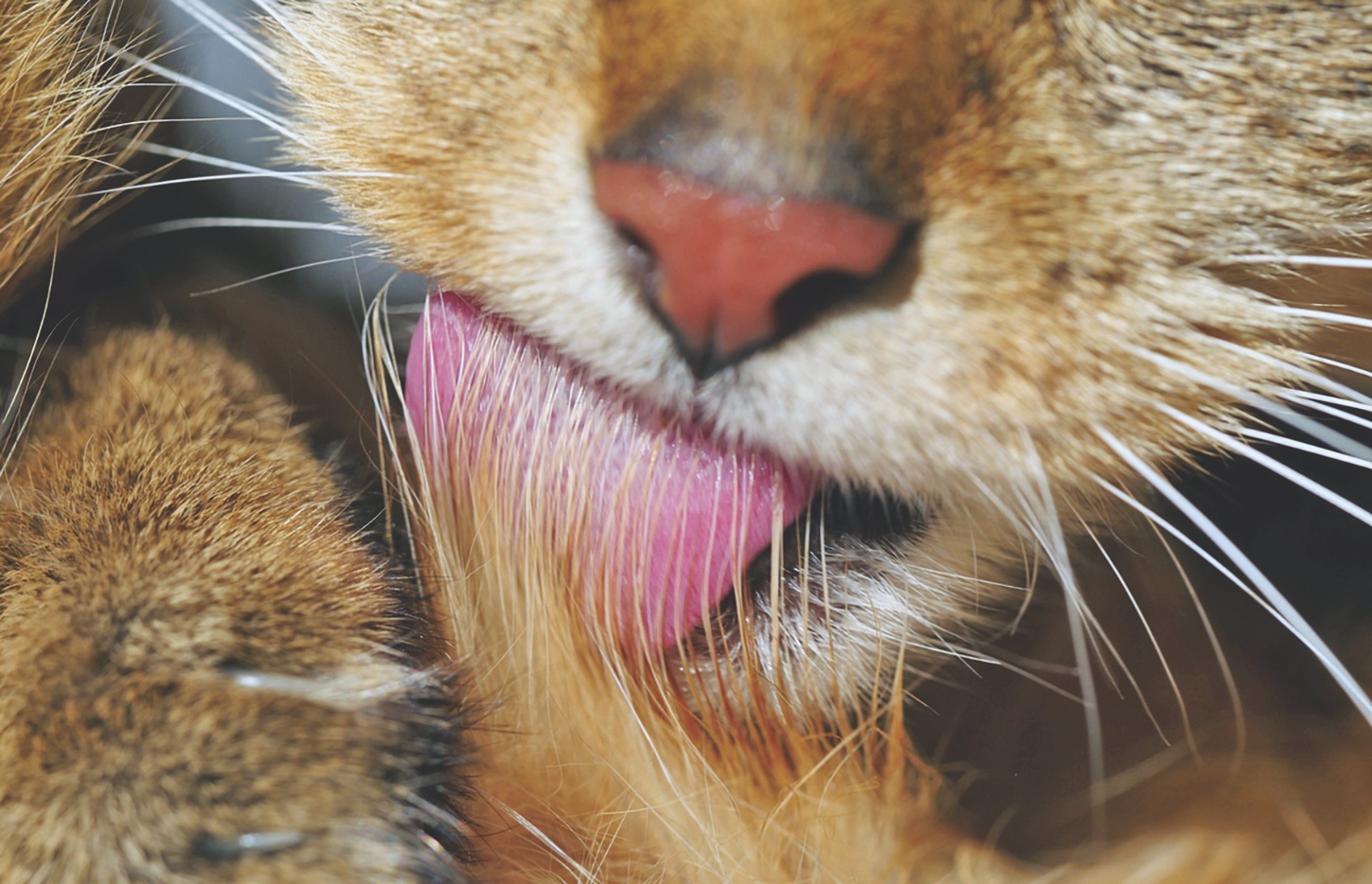
No surprise here: The most frequent reason for feline vomiting is hairballs. When your cat grooms herself, her tongue pulls out any older hairs and undercoat. The cat’s tongue has papillae, which are tiny barbs of keratin (the same substance in nails and hair) that face backward and grab hairs. Unfortunately, this hair is often swallowed.
Small amounts of ingested hair will pass through and end up in the feces, but large wads may build in the stomach where they can irritate the stomach lining. With enough irritation, your cat will vomit these wads up, compressing them into their characteristic tube shape as they come through the esophagus.
This is where vomiting serves a purpose. Still, you should try to minimize hairballs by grooming your cat and providing hairball supplements that help the hair pass through. Cats repeatedly prone to hairballs may do well on a hairball-preventive diet. In rare cases, hairballs in a cat’s stomach may become large enough to require veterinary intervention to remove them.
Vomiting Due to An Irritant
Cats will vomit to remove irritating substances from the stomach and esophagus. For example, some plants considered “toxic” aren’t systemically poisonous but are rather gastrointestinal irritants. Vomiting them up soon after chewing or eating them can prevent more serious problems.
If your cat has eaten something inappropriate, you may be tempted to try to make her vomit using hydrogen peroxide. This is NOT a good idea.
The Pet Poison Helpline emphasizes that hydrogen peroxide is not safe to give cats internally. It can “cause serious inflammation and ulcerations to the stomach and esophagus. It can also damage epithelial tissue, leading to intestinal bleeding. Because most of the damage is done internally, it may go unnoticed until your cat starts exhibiting external symptoms.” Symptoms include bloody stools, shock, and even death.
If your cat needs to vomit to remove a toxin, take her to your veterinarian where she will be given a safe medication that induces vomiting. She will also receive any necessary follow-up care for possible poisoning.
Worrisome Vomiting
Vomiting accompanied by diarrhea almost always means a vet visit is in order. Cats, and even more so kittens, can dehydrate easily. Blood in vomit, either bright red for fresh blood or dark for partially digested blood, means a physical exam and some diagnostics like bloodwork and/or imaging are important.
Repeated vomiting could indicate a foreign body stuck somewhere in the gastrointestinal tract. It may also be a sign of a metabolic disorder such as liver or kidney problems. Kittens may vomit up roundworms, and some cats will vomit in response to a food allergy, although skin problems are more commonly seen with food allergies than stomach problems.
Bottom line: An occasional vomit, especially if it brings up a hairball, is not reason to panic, but if your cat is vomiting on a regular basis or you notice any of the other warning signs mentioned above, she should visit her favorite veterinarian.