Unless you are feeding your cat really stinky food or he has an unsavory tendency to eat poop out of the litterbox, persistent bad breath (called “halitosis”) is a health concern and a good reason to schedule an appointment with your veterinarian. While periodontal disease stands out as the most common cause of halitosis in cats, it is important to keep an open mind, as there are many other potential causes.
“Halitosis is very much associated with periodontal disease,” says Dr. Nadine Fiani, associate clinical professor in the section of dentistry and oral surgery at Cornell University’s College of Veterinary Medicine. “However, it is not the only cause. There are other disease processes that result in increased abundance of bacteria and a shift in the delicate equilibrium of the oral microbiome resulting in halitosis. Not only that, but diet and general chewing habits can also change the smell of an animal’s breath. I think that if a pet owner notices halitosis, it is a great reason to talk to their vet and investigate the matter further!”
Diagnosis
The best way to diagnose halitosis in cats is to simply get up close and personal and take a big sniff. Your veterinarian will do the same, followed by a comprehensive full physical examination, with particular focus on the oral cavity, to try to determine the underlying cause of the bad breath.
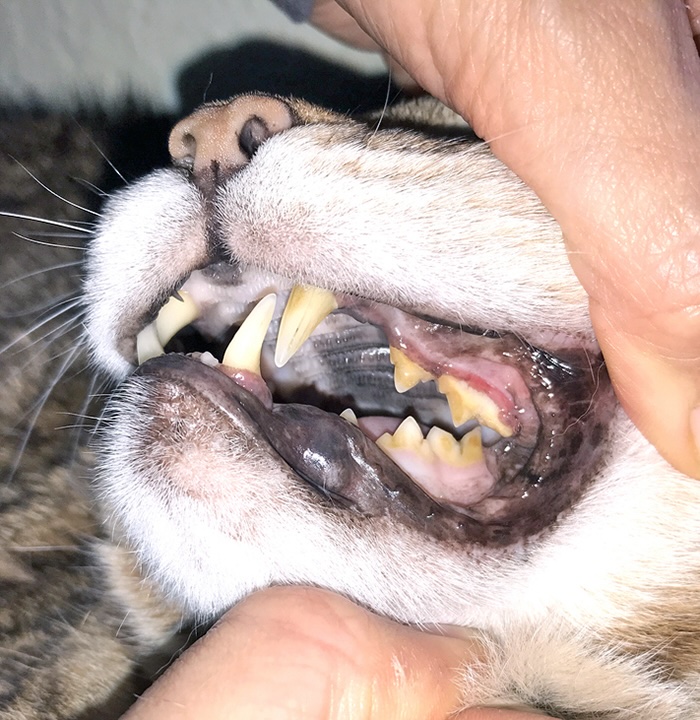
Your veterinarian will look for tartar, gingivitis, loose teeth (due to advanced periodontal disease), tumors, inflammation at the back of the throat (pharyngitis), any evidence of trauma (open wounds or fractures), burns (cats and kittens sometimes think it is fun to bite electric cords or lick caustic substances), foreign bodies (cats also sometimes think it’s fun to swallow thread or string that may get wrapped around the base of the tongue), ulcers (often associated with calicivirus infections or kidney disease), and any evidence of bacterial, viral, or fungal infections.
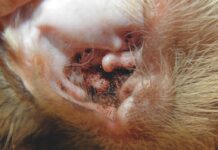
Other problems outside of the oral cavity can cause mouth odor as well. If your cat has deep skinfolds around the lips, a bacterial infection can brew there (called “lip-fold pyoderma”). Eosinophilic granuloma complex is a dermatological disease in cats that can cause painful, ulcerative lesions around the mouth. Sinus issues, polyps deep in the ear canal (which opens into the back of the throat), and gastrointestinal disorders are all potential contributors when it comes to halitosis.
Contributing Causes
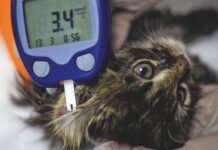
If your veterinarian can’t pinpoint the cause of the bad breath after a thorough physical examination, bloodwork is usually the next step to rule out any metabolic diseases that may be contributing to the problem, like diabetes.
Diabetes can cause an unusual mouth odor in cats that starts out somewhat fruity, eventually becoming more “acidic” in nature. Cats with kidney disease often develop bad breath from the toxins that build up in the bloodstream, resulting in an ammonia (or urine-like) smell from the mouth. Similarly, liver disease can cause bad breath due to decreased filtering of toxins from the body.
If, at this point, the cause of the halitosis has not been identified, your veterinarian will likely recommend a Comprehensive Oral Health Assessment and Treatment (COHAT), which is more commonly known among pet owners as a dental evaluation, with dental X-rays and teeth cleaning under general anesthesia. The purpose of the COHAT is to look for and treat any evidence of periodontal disease that may not have been identifiable during an oral examination in an awake cat, and, of course, to thoroughly clean the teeth above and below the gums to give your cat a healthy, clean, fresh mouth for you to diligently maintain moving forward.

If periodontal disease has been determined to be the cause of your cat’s halitosis and your cat has had a COHAT, it does not end there. Without intervention in the form of home dental care, your cat and his or her breath will likely be right back where you started in less than a year. For this reason, regularly scheduled COHATs, as directed by your veterinarian, are recommended in addition to some form of oral care at home. While daily tooth brushing with a veterinary toothpaste is considered the gold standard of home dental care, not all cats are going to allow this. If your cat is one of those, visit the Veterinary Oral Health Council (VOHC) website for ideas on safe, effective alternatives to tooth brushing for providing home dental care for your cat.