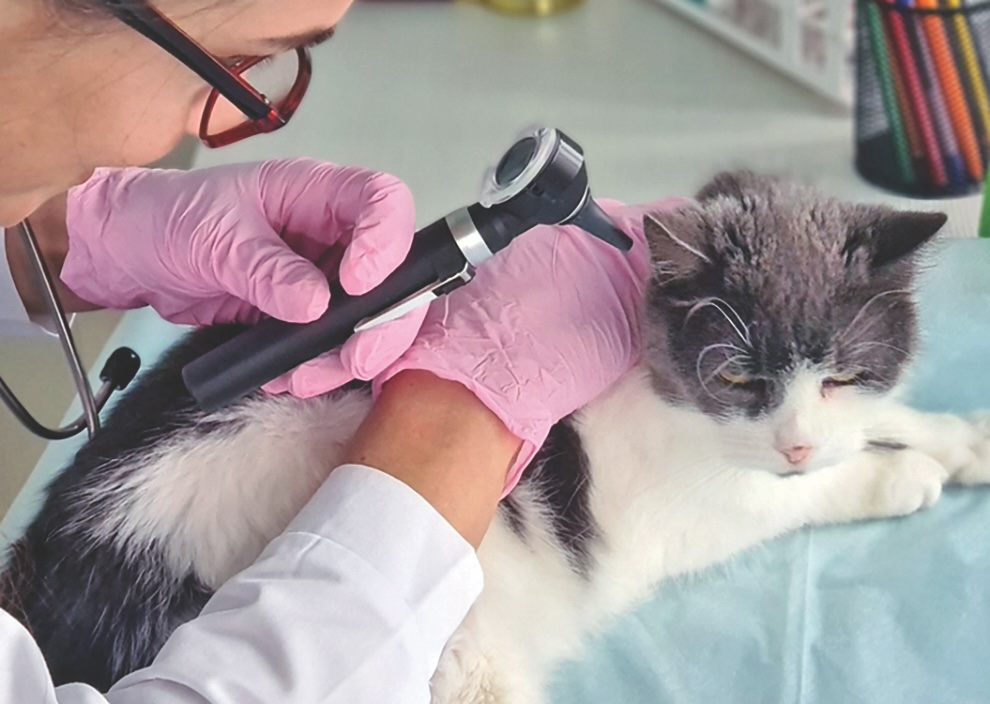
The loss of hearing in cats can be due to genetic mutations that affect the development of the auditory system (congenital) or to diseases that affect hearing later in life (acquired). Affected cats may experience partial or total hearing loss in one or both ears, and deafness may occur secondary to other feline diseases.
Recognition of deafness in cats is the first step toward assuring that cats with hearing impairment receive the care they need to live their best lives.
Recognizing Deafness
Whatever the cause, recognizing deafness in a cat is important to assure her happiness and safety. Even deafness in one ear is enough to erode her natural protection from dangers.
If you pay attention, you may start noticing changes in the behavior of a cat that is experiencing hearing loss. For one thing, deaf cats don’t respond to loud noises. For example, if your cat used to hide under the couch when your teenager was blasting music and now she doesn’t, she may be losing her hearing.
You may also notice that she no longer comes when she is called, and that she doesn’t react normally to startling noises. She may not hear you approaching and may act startled when she sees you. In addition, many deaf cats become highly vocal as their condition progresses.
Managing a Deaf Cat
A deaf cat can lead a good life but should be an indoor companion. She can go out in an enclosed catio or for walks on a leash and harness but should never be let outside unleashed.
Inside the house, you can develop ways to alert her to your presence. When approaching a sleeping cat with hearing loss, for example, stomp a bit on the floor so the vibration will wake her up. To attract her attention, consider a penlight or laser. You can train your cat to come to the light using treats or a favorite toy. Flipping lights on and off can also train your cat to come into that room. Liberal use of yummy treats can help with this training.
If your cat has a canine or feline housemate, she will often pick up on cues from them. You call the dog, and your cat may learn to follow. For enrichment, look for toys like balls that glow or flash when they roll. Toys with motion, such as wands with feathers, are great for deaf cats since they are still attracted to motion.

Older cats who lose their hearing appreciate having their regular routines maintained. They know when to come to be fed and when to expect you to come home, get up, and so on.
Be extra observant about interpreting interactions when you have a deaf cat. You don’t want another cat bullying the cat who can no longer hear the approach. The same goes for interactions with rambunctious puppies or kittens. Always make sure your deaf cat has safe places in the house to escape to, and easy access to resources such as food, water, and the litterbox will assure that she can continue to access these vital resources.
Electronics
While it may seem silly, consider getting an electronic locator device and affixing it to a collar on your cat. Finding a deaf cat who doesn’t hear your calls can be frustrating if you need to locate her.

Luckily, deaf cats are adaptable and can lead long, quality lives with a little extra effort on your part.