
The goal when treating any disease is to provide maximum benefit with minimum risk of side effects. Corticosteroids can provide amazing relief for our ill cats, but they can also cause some hefty side effects. Veterinarians weigh the pros and cons of using steroids every day.
What Are Steroids?
Corticosteroids are synthetic versions of cortisol, a naturally occurring hormone. Your cat cannot live without cortisol. In the body, corticosteroids:
- Regulate the immune system
- Control stress response
- Help maintain blood glucose levels
- Aid in blood pressure control
- Manage anti-inflammatory processes
- Control sleep schedules
Corticosteroid medications are most commonly used to reduce inflammation or intervene with immune-system disorders. Most cat lovers have heard of prednisolone (“pred”). Other corticosteroids used in veterinary medicine include fludrocortisone, triamcinolone, dexamethasone, budesonide, and flumethasone.
When your cat takes a corticosteroid medication, it impacts the production of cortisol by the body. The body senses that there is plenty of steroid going around and will down-regulate production. When your cat no longer requires medication, your veterinarian will guide you through tapering the dose so that your cat’s body will take over natural cortisol production once more.
These medications are good at what they do and have an extensive impact on the body. They are also generally low-cost, especially the famous “pred.”
Side Effects
The downside to corticosteroids is that their far-reaching effects can cause negative side effects as well.
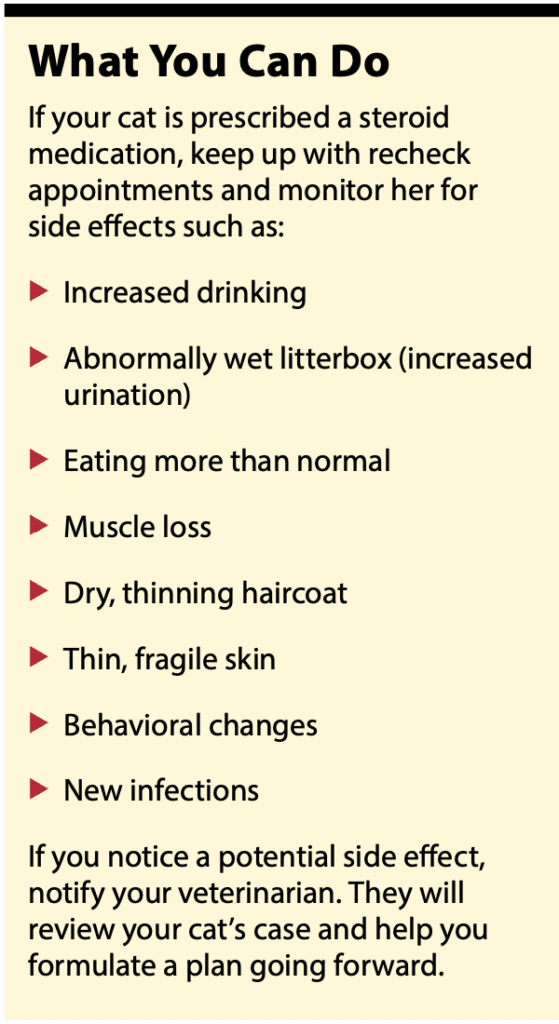
“The most common side effects of steroids are increases in thirst, urination, and appetite,” says Dr. Alyssa Chandler. “Muscle loss, skin and hair coat changes, and higher risk of infection are also common.”
Side effects are usually dose-dependent, meaning they are more likely to occur if your cat is receiving a high dose of a steroid medication. Risk also increases if your cat needs to be on the medication for a long time.
“Steroids can also precipitate diabetes and worsen heart disease in cats,” says Dr. Chandler.
Your veterinarian will do many things to protect your cat and try to maximize benefits while reducing side effects. Common strategies include:
- Regular check-ups and bloodwork to catch problems early
- Adjusting doses to find the lowest effective dose
- Using short courses of steroids to provide immediate relief along with other medications for long-term treatment
- Tapering the corticosteroid over days to weeks before discontinuing to prevent illness from stopping them too quickly
- Using topical medications when possible for localized issues
When to Use Steroids
“The most common reasons that I prescribe steroids in my practice as an internist are for feline asthma, gastrointestinal disease—both inflammatory bowel disease (IBD) and small cell lymphoma—and immune-mediated diseases,” says Dr. Chandler.
Asthma, inflammatory bowel disease, lymphoma, and many immune-mediated diseases often require lifelong treatment. Cats with asthma may only need seasonal medication, and cats with IBD may be managed with diet and other medications between flare-ups of symptoms.
Corticosteroids are sometimes used as a low-cost effort to help your cat feel better when obtaining an exact diagnosis isn’t possible. This strategy has its risks, of course, but can provide relief for ill cats who otherwise might not receive treatment.
What to Expect
You should see response to treatment quickly with most steroids, but specific medications and disease processes may require more time. “There are alternatives to steroids that may be appropriate for some cases and disease processes, depending on your cat’s needs,” says Dr. Chandler.
Your cat will likely be hungrier and more thirsty than usual. Make sure your cat has access to plenty of fresh water and check the litterbox(es) frequently.
If your cat is taking a short course of steroids, the bottle will have instructions for a tapering-dose plan. The veterinarian will start with a higher dose for a few days, then you will decrease the amount of medication and the frequency gradually. For example, a cat receiving pred might take 5 milligrams (mg) twice a day for five days, then 5 mg once a day for five days, then 5 mg every other day for five days, then quit.
This tapered-dose schedule is critical for your cat’s health. Stopping steroid medications suddenly before his body can start producing its own natural steroids again can cause severe health problems.
Cats taking steroids long-term need regular recheck appointments and bloodwork to monitor treatment progression and to catch any developing health problems or side effects early. You may be given frequent dosage adjustments at first as your vet gradually determines the lowest effective dose that gives your cat the benefits you want from steroids while limiting side effects.ν
Alyssa Chandler, DVM, is a board-certified internal medicine specialist and assistant professor at Cornell University’s College of Veterinary Medicine.