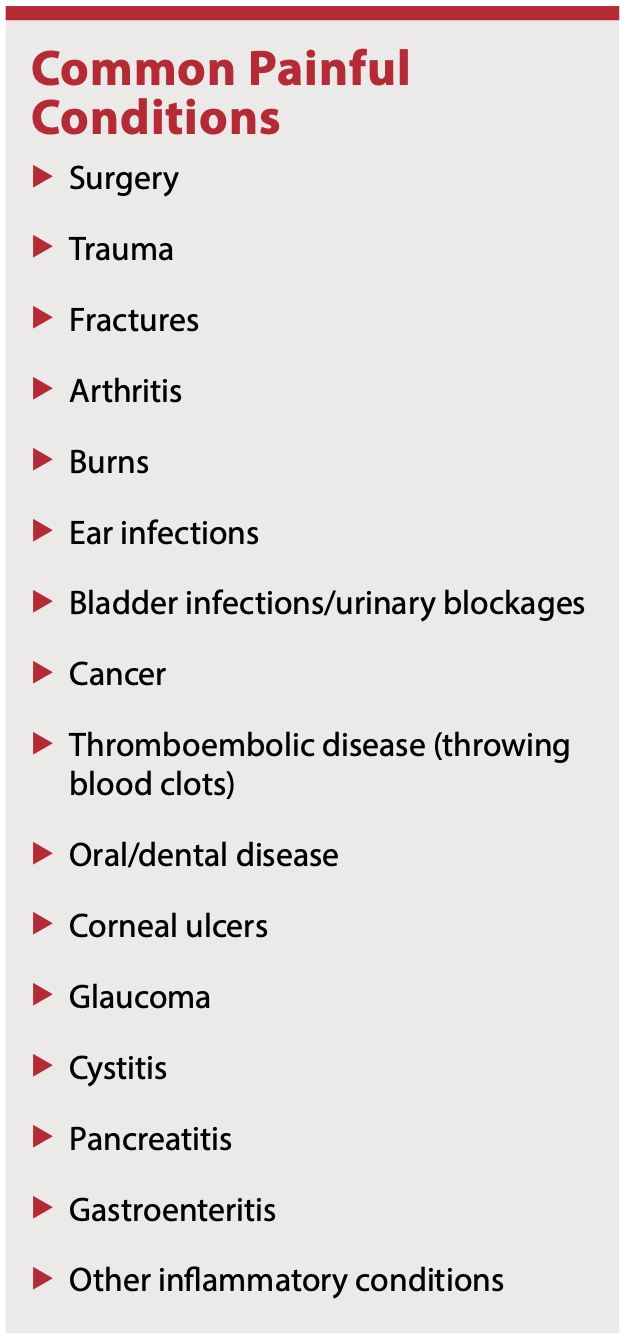
Cats are notorious for hiding symptoms of disease until they hit an intolerable threshold, at which point it seems that they are suddenly super sick. In many cases, by the time owners notice anything wrong, they’ve been sick for a while. They are similarly notorious for hiding signs of pain, making it difficult at times for owners to monitor the well-being of their beloved feline friends.
Why is this? Likely because they occupy a unique niche in the ecosystems they inhabit in that they are both predators and prey, and since they are usually lone hunters that cannot rely upon a pack to protect them. It behooves them to maintain an outward appearance of health so that they do not appear vulnerable to potential predators that prey upon them.
As such, cat owners need to learn what to look for when it comes to assessing pain in their cats.
“Feline pain can manifest in various ways depending on its source and severity. Some of these manifestations can be quite subtle,” says Dr. Alyssa Chandler. “Cats in pain often do not vocalize. Instead, they may withdraw, hide, appear hunched or uncomfortable, vomit, experience changes in appetite or thirst, or exhibit decreased activity. Any noticeable change in your cat’s usual behavior likely warrants a veterinary examination.”
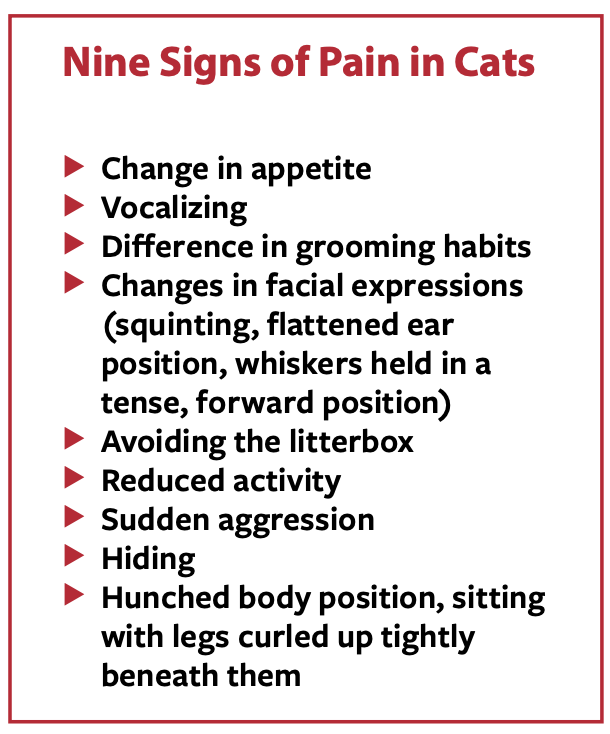
Changes in your cat’s resting body posture (crouching), facial expressions (squinting, staring), and response to you touching them can all be clues. Restlessness, aggression, lapses in normal grooming behavior, and poor hair coat can indicate pain in cats.
Limping is obviously a sign of pain, but guess what? Studies have shown that greater than 90% of cats over the age of 12 have radiographic evidence of arthritis, and few of these cats limp. Affected cats usually just choose to be less active because it hurts to do what they used to do, and we often write it off to old age when we probably shouldn’t.
A recent proactive study treated older cats that had radiographic evidence of arthritis with a non-steroidal anti-inflammatory (NSAID) medication and monitored their activity with activity-monitoring collars. The cats moved more while on medication for pain, presumably because they hurt less.
It’s not only important to recognize when your cat is in pain so that they live their best, most comfortable lives. Cats with chronic pain must figure out a way to cope with the pain, and these coping mechanisms can result in permanent behavioral changes that persist even after the pain is gone.
A classic example is the cat with a painful bladder. Avoiding the litterbox because of the painful urination associated with it is something that may become entrenched in your cat’s behavior and routine, even after the bladder pain resolves.
Don’t let chronic, unrecognized pain be your cat’s destiny. Awareness of the subtle ways cats express pain is the first step toward recognizing it. Be observant. Paying attention allows us to hear what our cats are trying to tell us in their uniquely feline way, and to get them the relief they need.