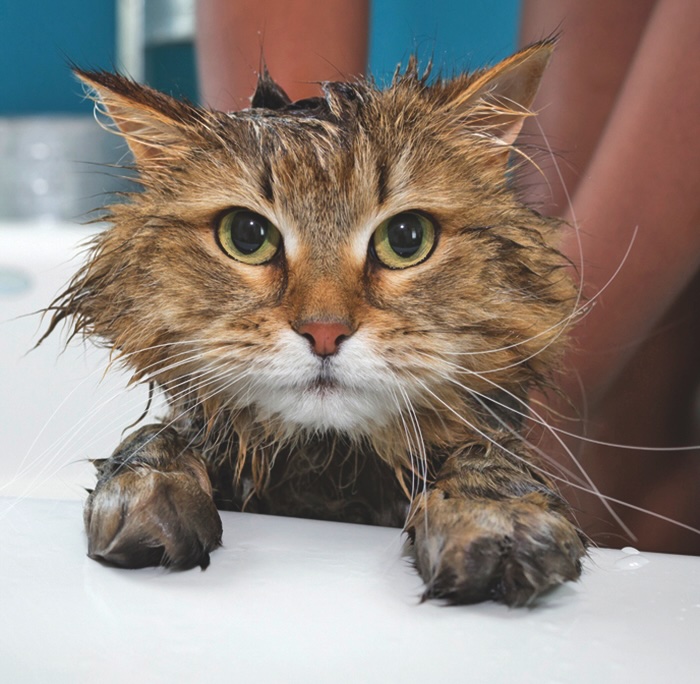
Many cats never need a bath. They’re amazing groomers. But, unfortunately, even indoor cats might get behind the furnace and end up dirty. It’s better for the cat to get a bath than to have him lick and consume that dust and dirt. A bath may be needed to:
- To remove any toxins on the coat
- As part of a veterinary treatment
- Parasite infestations such as fleas
- Cat has gained a “smell”
Bathtime Prep
Start by trimming nails a day or so ahead of time (it reduces the odds of you losing blood). Also, brush out as much old and dead hair ahead of time as you can, and trim out any mats.
The ideal set up is a double sink with a sprayer attachment. You can start with the sink dry and just use the sprayer, but it often helps to have the sink already full. Put warm water and some cat shampoo (only use shampoo approved for cats) in one side. If your cat has toxins on her coat, your veterinarian may recommend Dawn dish soap.
The other side of the double sink is clean warm water for rinsing. Have a big towel or two on the counter for wrapping up your cat post bath. If you have a pet blow dryer (human ones tend to get too hot) have that plugged in and ready to go, but away from the sink.
Your veterinarian may be able to dispense an oral sedative or recommend a calming supplement. Plugging in a pheromone diffuser like Feliway certainly can’t hurt.
Put some eye ointment such as artificial tears around your cat’s eyes to help keep any shampoo from getting in them. A piece of a cotton ball or a corner of a clean tissue should be put in each ear to help keep the ears dry. A washcloth with just water often suffices for cleaning the head. It should be damp with warm water but not dripping.
Having a helper is highly recommended. You need to keep a firm grip on your cat. A firm but gentle neck scruff with one hand may be all you need, but two hands are often required. Your helper can rub in the shampoo and help to move water around or use the sprayer on gentle for rinsing.
Place your cat in the sudsy side of the sink first. Gently rub the warm suds into her coat. Then move her to the clean water side and again, gently swish the water through her hair. Often the sprayer is not needed. If you need to, use it gently and make sure the water is warm.
Once rinsed, move your cat over to the towels and wrap her up. You can gently rub if needed and if she is not fighting. Most of the water will be soaked up by the towel.
If you need to use a blow dryer, keep it on a low setting and stick the end of the tube into the towel wrap. You can move it around while keeping your cat confined and your arms safe. Again, a helper is important here! Once your cat is dry or just damp, remove the cotton or tissues from her ears and release her.
“Sponge” Bath
If your cat only needs partial cleanup, for example from vomit or diarrhea on her coat, simply holding her in a sink and using the sprayer may be adequate. Remember to use warm water.
If your cat tends to be anxious or cranky, you may need some extra help. Catnip might be helpful if your cat is one who gets mellow, not hyper, while enjoying it. It might be wise to test this out ahead of time!
Consider a Groomer
Some groomers will bathe cats, so ask your veterinarian and fellow cat lovers for referrals.
For desperate cats, especially if you have a badly matted longhair cat or a cat with bad mats down her spine from poor grooming hygiene, your veterinarian may have a groomer willing to come in and work on him with sedation under veterinary supervision. It is, of course, important that you follow up with good grooming habits.