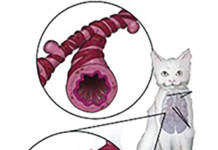
Feline asthma is an allergic disease that usually starts when cats are young to middle-aged. Exposure to offending allergens sets off an inflammatory cascade in the lungs that can cause bronchospasm (sudden constriction of airways), edema (swelling caused by fluid accumulation in enflamed tissue), and an increased production of mucus in the airways that can become obstructive. Some cat owners initially think the cat is dealing with a hairball, but soon they notice difficulty breathing.
“Feline asthma is a common cause of cough in cats, and in severe cases may result in respiratory distress, which is a medical emergency,” says Dr. Alyssa Chandler, assistant clinical professor in the section of small animal medicine at Cornell University’s College of Veterinary Medicine. “Like the disease in humans, the signs of feline asthma are the result of inflamed airways.”
“Your cat’s clinical signs, along with a thorough medical workup, to rule out other causes of cough, will help your veterinarian reach a definitive diagnosis of asthma,” says Dr. Chandler. Cough is the No. 1 clinical sign. Other signs include elevated respiratory rate, trouble breathing, and a noticeable abdominal effort on expiration. Asthmatic cats may open-mouth breathe or pant like a dog.
You Need a Diagnosis
The diagnostic workup for a coughing cat starts with the physical examination. Your veterinarian will watch your cat breathe and check for difficulty breathing (dyspnea), an abnormally high respiratory rate, and increased abdominal effort with each breath.
An assessment of mucous membrane color is important. Pale mucous membranes may sway the index of suspicion toward anemia as a cause for an elevated respiratory rate. Cyanotic (blue) mucous membranes suggest low levels of oxygen in the blood and may indicate a more serious problem that requires oxygen therapy.
Healthy pink mucous membranes usually mean there is time to get this all figured out. Your veterinarian will listen to your cat’s breathing for crackles (common with pulmonary edema, or fluid in the lungs), wheezes (common with asthma), and areas with no lung sounds where there should be (pleural effusion, space-occupying masses). Listening to the heart is important to help rule out cardiac disease as the underlying cause of the respiratory signs.
Baseline bloodwork is always a good idea to rule out other primary diseases like anemia and/or potentially complicating factors. The most useful diagnostic test for coughing cats is usually the chest X-ray. Your cat may need sedation for this test, especially if he or she is having difficulty breathing, as the stress of the X-ray may exacerbate breathing difficulty in cats. With sedation, your cat can be relaxed and calm for the procedure.
Classic radiographic signs of feline asthma include signs of inflammatory changes in the lower airways (bronchiolar pulmonary pattern), overinflation of lungs (air gets trapped in there), and even collapse of the smallest lung lobe (right middle lung lobe) due to obstruction with mucous. X-rays also help rule out other conditions like cancer, pulmonary edema, pleural effusion, and pneumonia as potential causes of cough.
Further testing like bronchoscopy, cytology, culture, and CT scanning are available if needed, but findings up to this point in the diagnostic process are often enough to make at least a presumptive diagnosis of asthma that warrants starting treatment.
Treating Asthma
“The mainstay of treatment for feline asthma involves a combination of systemic and/or inhaled steroids, titrated to control your cat’s clinical signs,” says Dr. Chandler. This is fundamental for long-term management of feline asthma. Air quality in the home is also important for these cats.
“Triggers for asthma in cats often include environmental allergens,” says Dr. Chandler. “Consider environmental modification such as removing smoke, dust, strongly scented cleansers and air fresheners. Adding an air purifier may be helpful.”
Feline asthma treatment falls into two categories: acute and chronic. Acute asthma attacks can be life-threatening. These cats cannot breathe and are in obvious distress, and such cases are true medical emergencies. On presentation to your veterinary team, your cat will be whisked away to a quiet place for emergency oxygen administration. A rescue bronchodilator (usually albuterol) will be administered by inhalation or by injection (usually terbutaline), if necessary. Your cat may be sedated to decrease stress and placed in an oxygen cage in a quiet location with continuous monitoring until stable enough to undergo chest X-rays.
A cat with asthma will typically go home on oral steroids (usually prednisolone) and prescriptions for a steroid inhaler (usually fluticasone) and a rescue inhaler for emergency use (usually albuterol).
The most important point to remember is that if your cat is diagnosed with asthma, even if his or her symptoms are mild, following treatment advice is critical. Feline asthma is never cured, but it can often be successfully managed.
Left untreated, feline asthma can result in severe, irreversible damage to the lungs. This can cause a cat to suffer chronic conditions like emphysema and chronic obstructive pulmonary disease (COPD).

If your cat is coughing or appears to be have difficulty breathing, contact your veterinarian right away. Difficulty breathing is an emergency. With early diagnosis and proper management of feline asthma, your cat can breathe a deep sigh of relief and breathe easily.
Dr. Alyssa Chandler is an assistant clinical professor in the section of small animal medicine at Cornell University’s College of Veterinary Medicine.