The big three diseases that cause weight loss and general unthriftiness in aging cats are chronic kidney disease, hyperthyroidism, and diabetes. But there is another one you should be aware of that could be the culprit, especially if the big three are medically ruled out: exocrine pancreatic insufficiency (EPI).
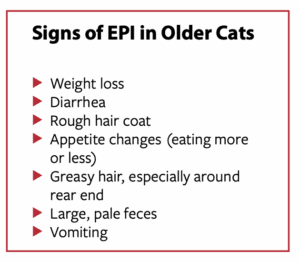
“EPI is relatively uncommon but should always be considered in middle-aged cats with a history of weight loss and diarrhea,” says Dr. Michael Merkhassine. “Other signs can include a rough hair coat, increased or poor appetite, and vomiting.” Additionally, affected cats’ feces may be overly large, pale in color, and quite odiferous. Their fur may become quite greasy, especially around the back end.
What Causes EPI?
The pancreas has several important jobs, one of which is to create enzymes that are necessary for food to be digested and utilized by the body. With EPI, the pancreatic cells responsible for the production of these enzymes are lost.
What causes this? While there is the possibility of immune-mediated destruction of these cells, in cats EPI is almost always due to chronic pancreatitis (inflammation of the pancreas).
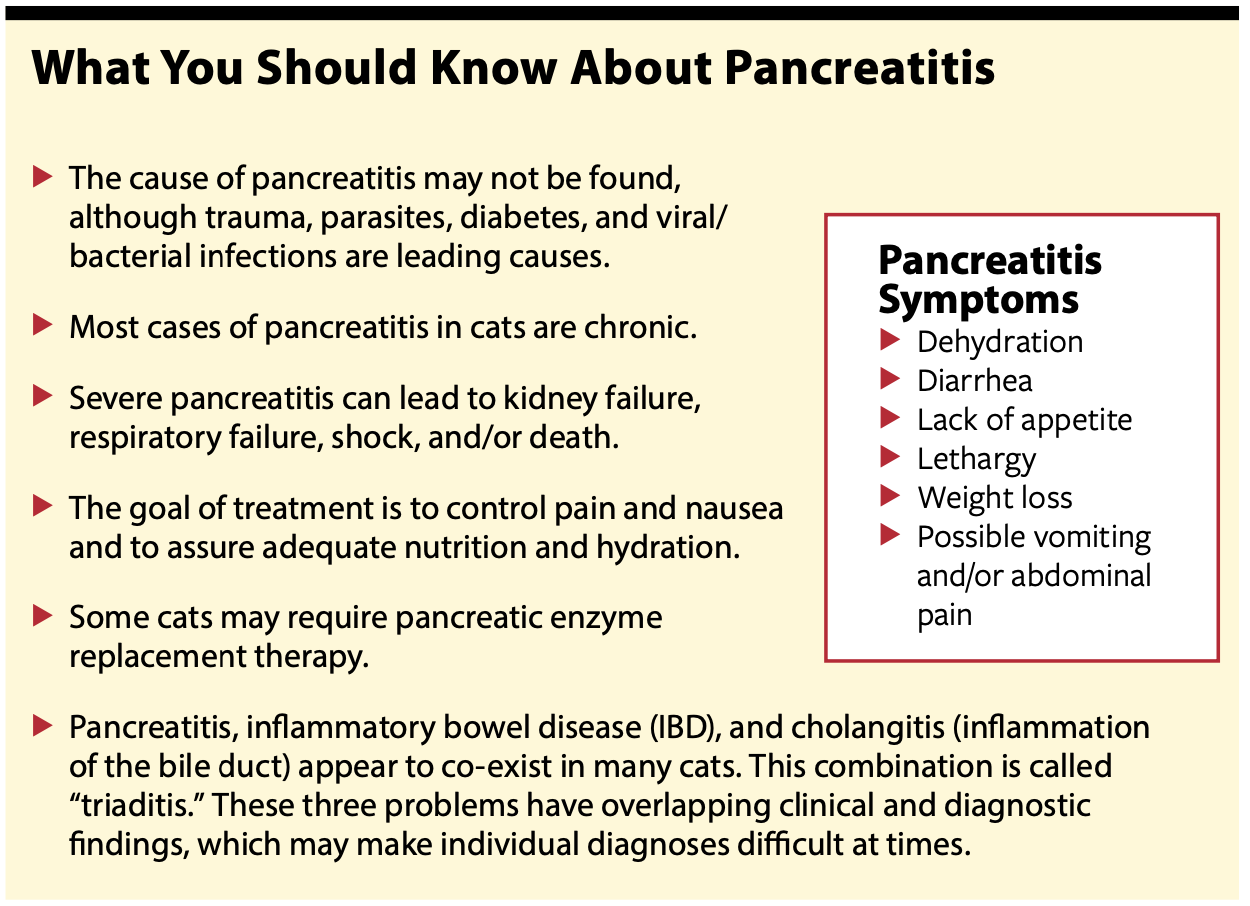
It’s important to be aware of the sometimes-subtle signs of chronic pancreatitis, including lethargy, lack of appetite, and vomiting. Associated weight loss usually happens over time. Pancreatitis is typically diagnosed with the help of a blood test called feline pancreatic lipase immunoreactivity (fPLI) and abdominal ultrasound (see below).
Unfortunately, there is no specific treatment for pancreatitis, and management is geared toward minimizing symptoms and controlling pain associated with the disease.
If your cat is diagnosed with chronic pancreatitis, you need to be on the lookout for EPI, which could come next.
Diagnosis of EPI
“EPI is primarily diagnosed via a blood test called feline trypsin-like immunoreactivity (fTLI), with a value less than 8 ug/L considered diagnostic,” says Dr. Merkhassine.
“In a recent publication, about 5% of cats with gastrointestinal (GI) signs that had lab work submitted came in below the reference range. Some cats may test in the low-normal range and still have EPI, although in those cases the diagnosis can be more challenging,” he says.
For cases in which the signs fit but the fTLI is normal, repeating the test in a month or so may help clarify the diagnosis. “Alternatively,” says Dr. Merkhassine, “an enzyme trial can be undertaken to help make the diagnosis. Aside from causing oral trauma if not mixed correctly (see below), there are no significant side effects/risks associated with the enzyme powders, since they are not absorbed and pass in the stool. It is very common for cats with EPI to also have cobalamin (vitamin B12) deficiency,” says Dr. Merkhassine. “A study in a different publication reported that 75% of cats with EPI had cobalamin deficiency.”
Because of the known comorbidity of EPI and cobalamin deficiency, and the close association of the pancreas and intestines, most GI laboratories offer a panel of tests for cats with GI disease that includes cobalamin, folate (vitamin B9), fPLI, and fTLI. Cats must be fasted for at least 12 hours prior to having blood drawn for these tests.
EPI Treatment
Treatment for EPI is straightforward and entails giving affected cats what they are missing, the digestive enzymes and cobalamin. “Most cats will do well with pancreatic enzyme and cobalamin supplementation, with a published response rate between 60% to 80%,” says Dr. Merkhassine.
Commercial products containing dried extracts of cow or pig pancreas are available by prescription through your veterinarian. These are typically powders meant to be mixed into the food before it is offered. Some come in tablet form, but the powder is considered more effective.
Because EPI is a serious disease, it is always better to work with your veterinarian and his/her recommended prescription product than just winging it yourself with over-the-counter supplements.
 If a pet owner prefers, raw pancreas from animal sources (e.g., bovine, porcine, ovine, deer) can be finely chopped and added to each meal. Frozen raw pancreas will retain its enzyme action for months. There are, however, potential cat and human health risks associated with handling these raw animal products, so most cat owners elect to use a commercially prepared powder.
“When using pancreatic enzymes, it is important to remember to add water and wait about 15 to 20 minutes to let the enzymes pre-digest the food before serving,” says Dr. Merkhassine. “If the powder is ingested without water, it can cause oral/tongue ulcers and bleeding and cause the cat to become food averse.”
Cobalamin can be supplemented either by subcutaneous injection (usually given once per week for six weeks then once every one to two months depending on lab results) or orally with a once-daily tablet.
The best diets for cats with EPI are high in protein, contain moderate amounts of fats, and are low in fiber. Fiber is hard to digest and may hamper the effectiveness of added digestive enzymes. Feeding several small meals a day is thought to improve overall digestibility.
“Treatment is lifelong and can be complicated by pickiness toward the enzyme powder,” says Dr. Merkhassine. “In these cases, you can try getting the powder compounded into a capsule, but it may not work as well. If the clinical response is not what you would expect, it is important to look for alternative causes of weight loss/GI signs, such as hyperthyroidism, inflammatory bowel disease, and/or intestinal lymphoma,” says Dr. Merkhassine.
Bottom Line
While EPI is not curable, most cats respond favorably to treatment, showing improvement within days of starting pancreatic enzyme supplementation.
The long-term prognosis for EPI is good if cats are treated by a veterinarian and fed properly, closely monitored, and have any comorbidities appropriately addressed.
Dr. Michael Merkhassine is an assistant clinical professor of small animal internal medicine at the Cornell University College of Veterinary Medicine.