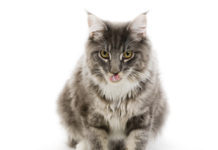
If you have a food-motivated cat, giving him a special treat is a magical bonding moment for both of you. And you have probably removed him from various platters and possibly even the fridge when his stomach hijacked his manners. If you stick to small amounts of safe foods, your cat can enjoy a snack of “human” food occasionally.
Foods to Share
“I have always said that sharing a teaspoon or two of your meat entree can be fun as long as you don’t overdo it,” says Joseph J. Wakshlag, PhD, DVM, MS, ACVN, ACVSMR, Professor, Clinical Nutrition and Sports Medicine and Rehabilitation at Cornell University’s College of Veterinary Medicine. Cats are obligate carnivores, so they usually love meats and need that protein in their diets.
To avoid stomach upset, offer your cat bits of meat that don’t have a lot of seasoning or sauces. Lean meats are generally well tolerated. Fatty cuts are tasty but may cause diarrhea if your cat eats too much (especially if he isn’t used to these treats). Never let your cat eat cooked bones, as these are brittle and can damage his teeth or get lodged in his throat and intestines.
Other meaty delicacies that your cat may enjoy in small amounts are the drippings from a turkey or roast (dribble a small amount onto his regular meal), gravy, or canned tuna. Be sparing with cold cuts because these products often have high salt content.
But meats aren’t all that cats can eat. Get creative and see what foods your cat enjoys. “I have heard of cats eating bread, peas, pasta, and mango,” says Dr. Wakshlag. As long as a food item is not toxic to cats, you can offer a small amount to see if your cat likes it. We have even heard of cats who like pickles and corn on the cob.
Dairy products such as milk, whipped cream, cheese, and ice cream are often popular with our feline friends, but tread carefully. Adult cats are lactose intolerant and can get diarrhea from eating dairy. A little taste now and then is fine, but if your cat overindulges, you may both pay the price with a stinky litterbox.
Foods to Avoid
“I would stay away from onions and garlic due to toxicity, and other allium producing vegetables (such as chives, scallions, and shallots) to be cautious,” says Dr. Wakshlag.
The ASPCA Poison Control Center has a thorough list of foods to avoid sharing with your cat, including:
- Alcohol
- Yeast dough
- Chocolate
- Coffee
- Caffeine
- Citrus
- Grapes
- Raisins
- Onion
- Garlic
- Chives
Extremely salty foods can cause dehydration and even salt toxicity, which can be fatal. This is why unseasoned meats are recommended for cats.
If offering your cat a processed food item, check the label for xylitol or birch sugar. This is an artificial sweetener that can cause acute liver failure. Dogs are very susceptible to it, but we don’t want to take any risks with our cats either.
It is also a good idea to avoid feeding raw meats (including poultry) and eggs. These foods carry a risk of bacterial and other contamination that can cause stomach upset or disease. Since you are likely cooking the meat for yourself anyway, tell Fluffy to wait until the steak gets off the grill and cools a bit.
How Much is Too Much?
Remember that cats should ideally get 10% or less of their daily calories from treats. Bits of human foods count toward this allotment. Consider the amount of human food that your cat gets each day, and add up the calories to make sure that he is still within his limit. This ensures that he is getting the bulk of his calories from a complete and balanced cat food that includes all the vitamins, minerals, and nutrients that his body needs to thrive.
Check out the October 2025 Cornell CatWatch issue or online at catwatchnewsletter.com for a detailed breakdown on treats and calculating your cat’s daily calorie needs.
Feeding Rules
Most of us do not want cats on our kitchen counters for sanitary reasons, and we definitely don’t want cats playing on or near the stovetop. To help reinforce the kitchen as a cat-free zone, follow these rules:
- Don’t leave food out on the counter unattended. This temptation encourages your cat to come up.
- Never feed your cat while he is on the counter. Deliver special treats and snacks to his bowl, or feed them on the floor.
- If you don’t want your cat on the table, follow these same rules for the table.
Cats who nip or swat to demand treats shouldn’t get anything. Wait until your cat has settled down before giving him a treat. If necessary, gently but firmly shut him into another room while preparing food.
“I have always said that sharing a teaspoon or two of your meat entree can be fun as long as you don’t overdo it,” says Dr. Joseph Wakshlag.