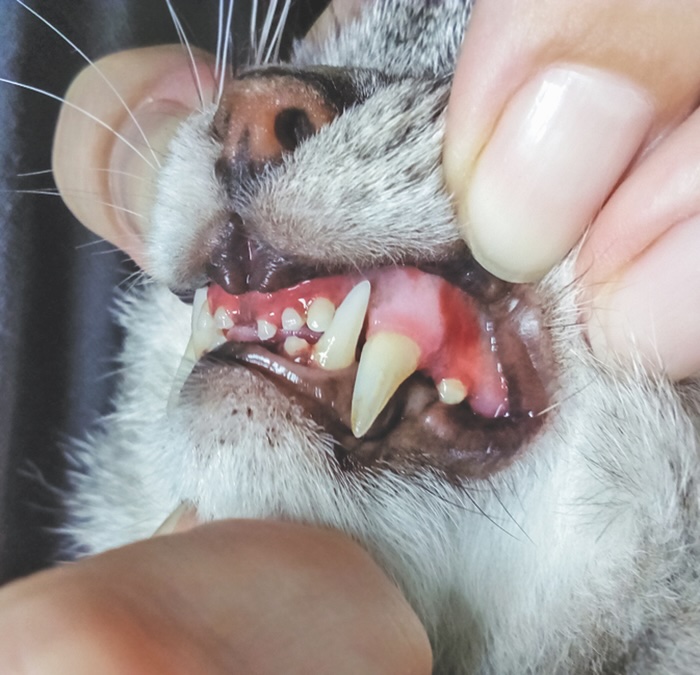
Many cats develop oral issues as early as young adulthood. Oral problems, including dental disease, can be painful. But, of course, cats have a great propensity to hide discomfort, so you may not know they are in pain until these problems are advanced.
For this reason, oral problems may appear to come on suddenly when your cat becomes visibly uncomfortable. This is why regular veterinary screening for oral problems, especially dental disease, is important for your cats’ health and wellbeing.

Screening for Dental Disease
Screening for dental disease starts with the annual wellness exam. Your veterinarian may notice subtle changes that indicate impending pathology (dental disease).
Weight, nutrition, litterbox management, and home dental care are reviewed, and a thorough physical examination, including a careful evaluation of the cat’s oral cavity (teeth, gums, tongue, cheeks, palates, and pharynx), is performed.
Oral diseases cats suffer from include:
- Tooth resorption
- Gingivostomatitis
- Eosinophilic granuloma complex
- Neoplasia (cancer)
- Fractured teeth (usually the canine teeth or “fangs”)
Tooth Resorption
“Tooth resorption is a common dental disease in the general cat population, and it can cause subtle oral pain signs that may go unnoticed at home,” says Dr. Alexandra Wright, board-certified veterinary dentist and assistant clinical professor in the section of dentistry and oral surgery at Cornell’s College of Veterinary Medicine. “While we do not fully understand the cause of the disease, we can help alleviate oral pain by identifying affected teeth and surgically treating them accordingly.”
The difficulty with tooth resorption is that the preliminary stages start below the gumline, so the lesions aren’t noticed during a routine oral examination. Additionally, your cat may not show signs of this disorder until the lesions progress upward above the gumline. This is when tooth resorption typically becomes overtly painful.
 To find these early stages, the cat will need “an exam under general anesthesia and intraoral radiographs, as it’s important to investigate for lesions above and below the gum line,” says Dr. Wright.
A “Dental”
Your veterinarian may recommend screening for dental disease using comprehensive oral health assessment and treatment (COHAT), aka a “dental.” The COHAT starts with a pre-operative physical examination, pre-anesthetic bloodwork, intravenous catheterization, and general anesthesia.
A licensed veterinary technician will usually clean all the teeth and take full-mouth intraoral X-rays for the doctor to review. The doctor will examine the entire oral cavity, check for loose or fractured teeth, manually probe along the gumline to check for periodontal pockets and any signs of infection or pain, and evaluate the full-mouth intraoral X-rays. Any necessary treatments are performed, finishing with a final tooth polish. The cat is then moved to recovery and monitored carefully during the post-procedure period.
“Dental diseases increase in frequency and severity as an animal ages, and cats are no exception,” says Dr. Wright. “Annual exams with your veterinarian are the best way to stay on top of your cats’ oral health, especially as they age.”
Most veterinarians recommend you start regular screening COHATs for cats in young adulthood when they are between 2 and 3 years of age.
Alexandra Wright, DVM, is a board-certified veterinary dentist and assistant clinical professor in the section of dentistry and oral surgery at Cornell’s College of Veterinary Medicine.