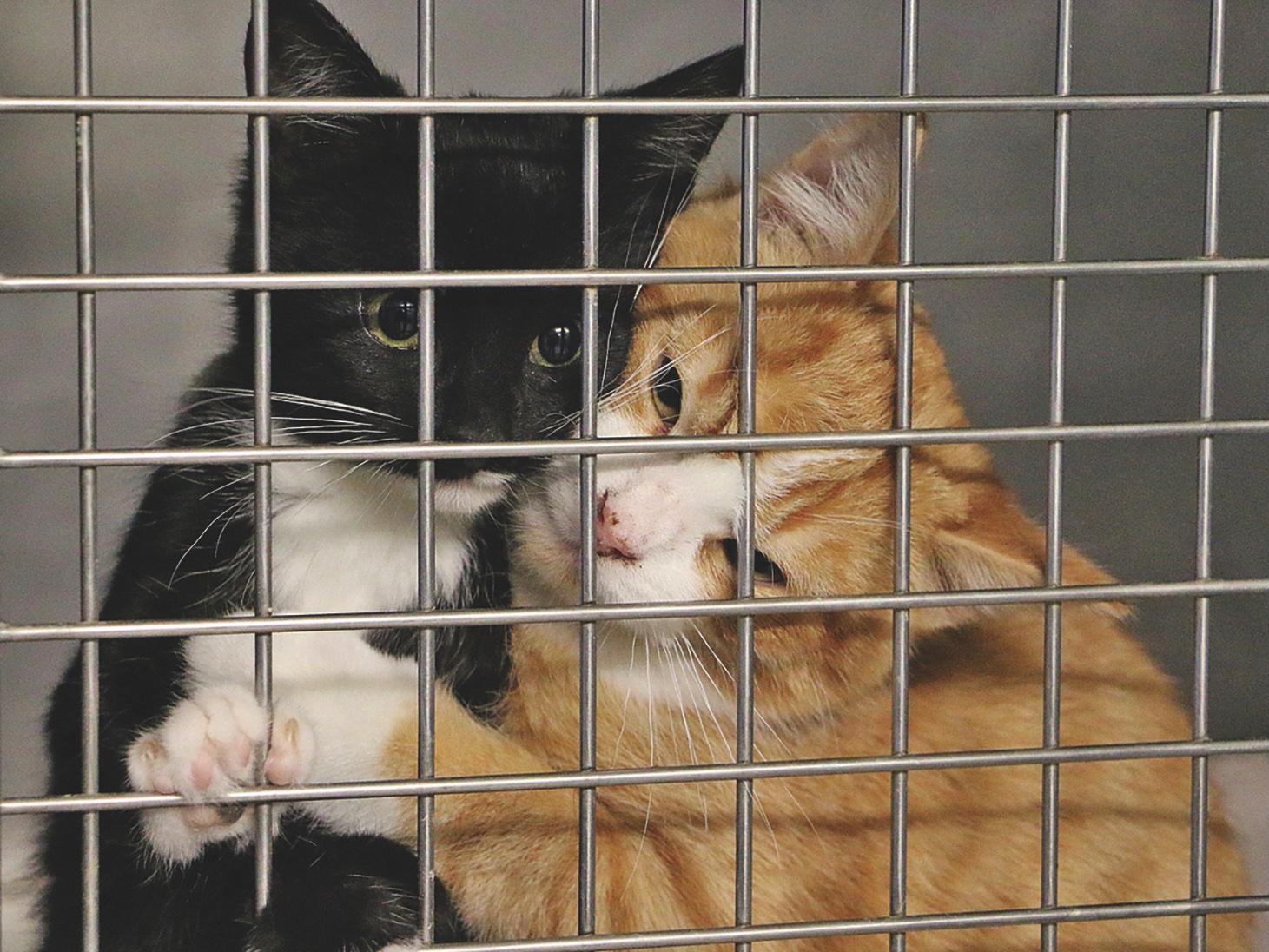
Many shelters and rescue groups try to place homeless cats in foster homes when possible. This relieves some of the pressure on the shelter staff and makes room for more cats in need, plus it enables the cats to get more personalized care and attention. Fostering isn’t for everyone, but it can be a rewarding way to help a cat in need.
Ideal Setup
Some home and schedule factors will impact whether fostering is a good fit for you. Maddie’s Shelter Medicine Program at Cornell University works closely with the Tompkins County SPCA and their foster coordinators Karen Nieves, LVT, and Ashley Workman, LVT. These experienced shelter workers have several recommendations on what you need to be a successful foster home:
- A space to keep your foster cat(s) separate from any personal pets. This space should have everything the cat needs and be easy to clean.
- Your own transportation to get to and from the shelter and any veterinary appointments as needed.
- Enough flexibility in your schedule to accommodate veterinary appointments as needed for both routine vaccines and care and emergencies that may arise.
- Personal pets should be fully vaccinated and on a regular flea treatment and deworming schedule.
You’re Not Alone!
In exchange for opening your home and giving your time to a homeless cat, the shelter or rescue group will provide resources to support your efforts. Shelters typically cover the cost of food and veterinary care for all their cats in foster homes, but it is good to verify this up front.
Things that you should expect from the shelter or rescue group that you are working with include “a written manual with expectations regarding the program and advice on how to best care for the cat, some form of training or orientation, after hours contact or protocol for seeking care in case of emergency, and full disclosure on known behavior or medical issues,” say Nieves and Workman.
The rescue will also take the lead on reviewing applications from prospective homes for the cat.
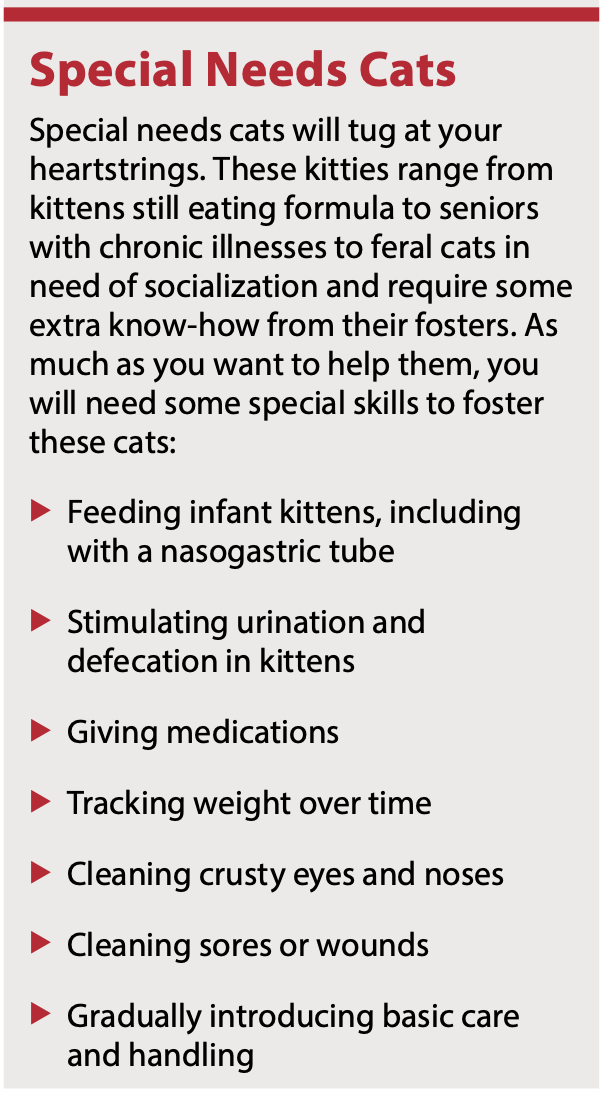
Expect your relationship with the organization to evolve over time. For your first time fostering a cat, the shelter or rescue will likely give you a straightforward case. If desired, over time the organization will provide additional training to help you expand your skills caring for cats and kittens with special needs.
Be open about your skills and experiences with cats, and what you are willing or unwilling to deal with. Shelters and rescues want their cats to be able to thrive in a foster home so they have a better chance of being adopted and want their fosters to have a positive experience so they continue to help cats in need. Discuss how long you can keep a foster in your home, or how long the organization expects the cat to stay.
Settling In
A new foster cat will need a quiet, secure place to live in your home. This space should include food, water, a litter box, and hiding and napping spots. It also needs to be separated from your personal pets.
Why should foster cats stay separated from your personal pets? This is for the health and safety of all pets involved. Foster cats have generally undergone initial veterinary care and are not critically ill, but parasites and upper respiratory diseases are very common in homeless and stray cats. Diseases such as feline immunodeficiency virus (FIV) and feline leukemia virus (FeLV) may not show up on a test the first time around. Plan to wash your hands and change clothes between interacting with your foster cat and your personal pets, especially during the first week or two that the foster is with you.
As well as preventing the spread of illness, keeping fosters separate prevents any bullying, fights, or squabbles between the foster and resident pets.
Moving into a new environment is stressful for cats. Expect a new foster to be shy and reserved at first. The cat may hide and avoid being touched. Keep your foster cat’s space quiet and give her the space and time she needs to acclimate.
One way to get a foster cat used to you is to spend quiet time in the foster’s room. First, just sit and read or work on a laptop quietly for a chunk of time each day. Then try reading aloud to let the cat get used to your voice. You can also pair these activities with meals or treats.
Bottom Line
Fostering cats is a great way to help cats in need and ease the pressure on shelters and rescue groups. Communication is key. There should be an open dialogue between you and the organization regarding training, care expectations, and how the cat is doing. Together, you and the shelter or rescue make up the team that will help homeless cats get ready for their permanent homes.