The “no lilies for kitties” campaign has alerted most cat owners to the potential harm that these attractive plants can cause. Merely drinking the water from a vase of lilies, for example, can be fatal for cats. Luckily, most lilies are outdoor plants, so you should be safe on that front, but avoiding floral arrangements with any kind of lily is a good idea if you have any feline friends around.
Deadly House Plants
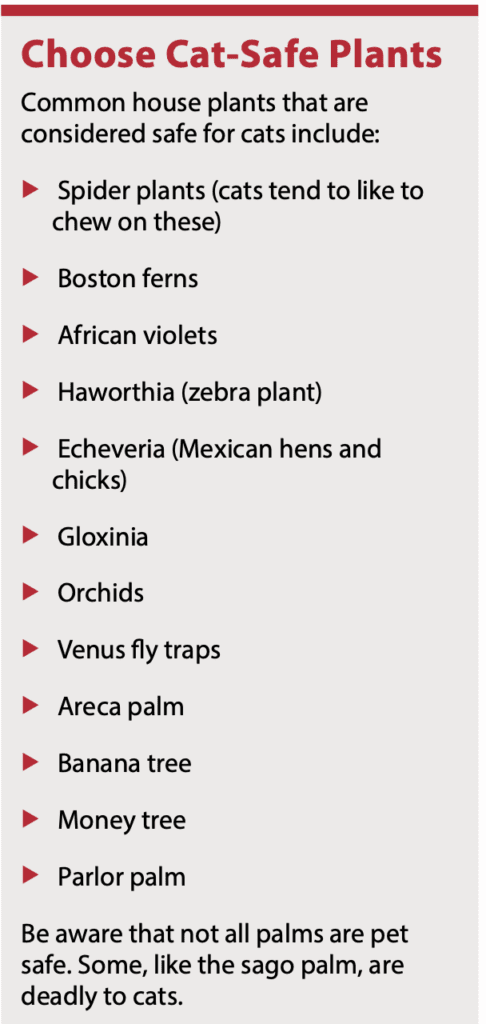
Popular house plants that should be avoided at all costs include:
- Lilies (yes, some are worse than others, but let’s just avoid them!)
- Aloe (the sap can make your cat extremely sick)
- Jade
- Dieffenbachia
- Philodendron
- Sago palms
Many plants that might be in the house as cut flowers, such as tulips, daffodils, and lilies, are toxic to different degrees. Many cause gastrointestinal irritation, leading to vomiting and/or diarrhea, but some can have long-lasting effects. A good example of the latter is the renal failure that some species of lilies can cause in cats.
Plants Attract Cats
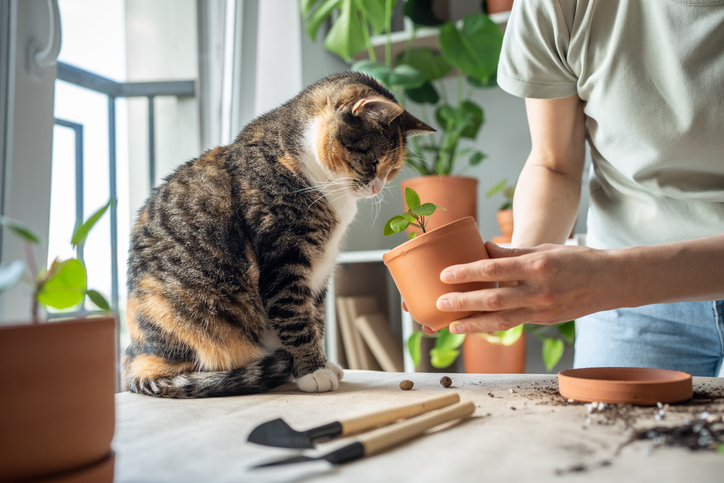
Pet safety with house plants is more than just keeping your cat from chewing or eating foliage. With large pots and exposed dirt, your cat may use these as a spare litterbox, or she may simply enjoy a good dig and expose roots, either of which may kill the plants.
Sprinkling some pepper on the dirt may work to discourage your kitty. Pet-safe citrus sprays can also be effective deterrents. Bitter Apple is an old stand-by for deterring pets from an area.
You can also place decorative rocks, marbles, or seashells around the base of your plants to discourage interest. Some owners make or buy protective covers to deny their cats access to the soil in plantings.
Think carefully about hanging planters with graceful cascades of leaves hanging down. Cats, especially young ones, may see those leaves as great places to swing on. Try your planter locations with plants that are not valuable, rare, or dear to your heart first. If you put your pots on your cat’s favorite windowsill, you’re asking for problems.
Plant stands and hard-to-reach shelves may keep plants safe from an inquisitive feline botanist. Another, somewhat unique idea, is to put your precious plants inside decorative bird cages, although the right cage and position of that cage will matter.
Using terrariums or having a dedicated conservatory for your plants are slightly more complex but effective solutions. That said, it’s best to limit your collection to cat-safe plants. Cats are incredibly clever and dexterous and if they want in, they will find a way.
Remember that if you fertilize or feed your house plants, be sure it is with cat-safe products.
Potted plants on windowsills, a favorite place for cats to hang out, can result not only in damaged plants, but also injury to your cats if they fall. Blocking these areas from your cats is not a bad idea.
Plants and Cats Can Co-Exist
Many cats will chew on houseplants, so it is wise to provide your cat with her own safe plant to chew on. Trays of safe grasses provide easy entertainment for your cat and help to keep your plants safe. A plot of catnip could be a big hit with the feline contingent of your household. Plants and cats can co-exist in your house if you choose your plants wisely and carefully consider where you put them.