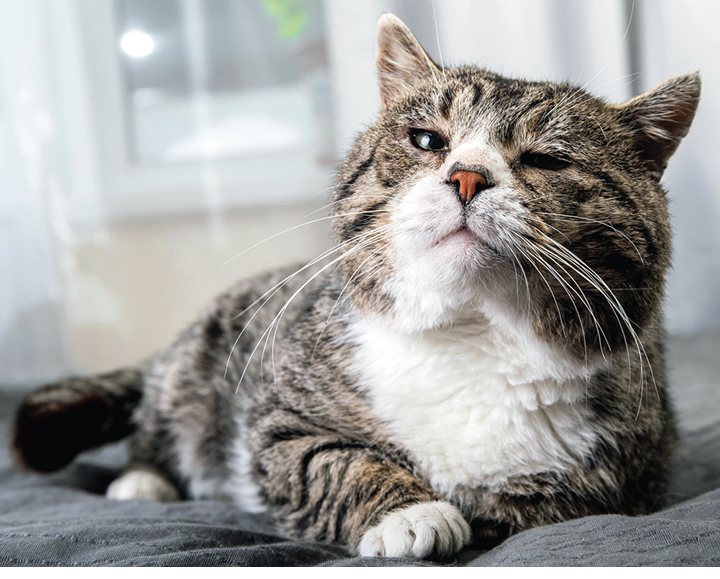
Aleksandr Zotov | iStock Photo
Christine Charvet, PhD, a comparative neuroscientist at Auburn University’s College of Veterinary Medicine is studying aging changes in brains, using comparative models of a variety of species, including cats. By looking at thousands of health records, analyzing blood samples and brain scans, and using data from the Catage Project, Dr. Charvet developed a new formula for feline aging.
Traditionally, one year in a cat’s life was considered equal to seven years in a human.This study, however, suggests a 1-year-old cat is more like an 18-year-old person. The aging equivalency then slows, with a 2-year-old cat equating to a 22-year-old human. A 15-year-old cat is close to being an octogenarian in the human world. Feline brains also show physical changes that mimic aging in people, such as the plaques and tangles of abnormal proteins that are seen in Alzheimer’s disease in people.
Ledford, H. “Cat brains age like ours – and could help scientists to understand cognitive decline.” Nature. 2024 Nov;635(8038):266-267. doi: 10.1038/d41586-024-03492-1. PMID: 39506168.