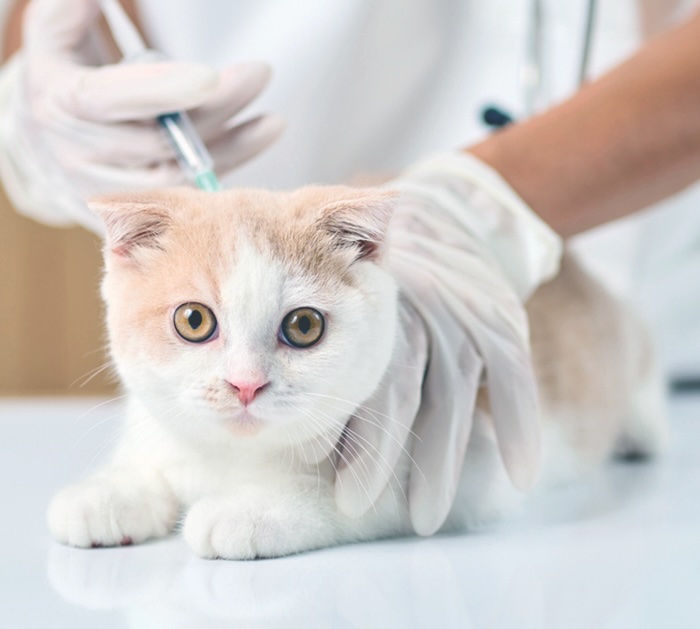
Staggering vaccinations, or stretching the time between the vaccine injections, means the cat would, for example, get distemper/calicivirus/herpes on one day and then feline leukemia in three to four weeks, and rabies a month later. This schedule necessitates additional trips to the veterinary clinic and, sometimes, additional office-visit fees. Is it worth it for your cat’s health? Not usually.
Kitten Vaccinations
Kittens receive their vaccinations at three- to four-week intervals. Shorter intervals may not allow their immune systems to respond adequately to the exposed pathogens and reset for the new challenge.
With kittens, you are dealing with an inexact understanding of when maternal immunity (immunity passed on to the kittens from mother’s milk) is gone. Remaining maternal immunity can interfere with the kitten’s own immune response to a vaccine. Concerns about maternal immunity lingering past 16 weeks of age have led both the American Animal Hospital Association (AAHA) and the World Small Animal Veterinary Association (WSAVA) to suggest that many kittens would benefit from an additional follow-up booster for core vaccines at 6 months of age.
Booster Vaccinations
Once you get beyond kittenhood, most cats simply get all their boosters at the same time, usually at three-year intervals. There is good evidence that this practice is well-tolerated in most cats. In rare cases (i.e., senior/immunocompromised cats), there may be justification for considering spreading out booster vaccines in adult cats, but this must be balanced with the knowledge that requiring more veterinary visits to fully vaccinate a cat may be associated with a decreased likelihood that a cat will receive all necessary vaccines.
Vaccination Choices
The necessary core vaccines for an indoor cat in a single-cat household may differ from that of an indoor/outdoor cat or a household where you foster cats and have a frequent turnover of resident cats and kittens.
 With both shelter and feral colony situations, caretakers take advantage of times when they have a cat.
A trapped feral cat will get all its necessary boosters at once, which is better than risking being unable to catch and vaccinate the cat again. Cats in shelters benefit from leaving fully vaccinated to give them their best start in their new homes.
As always, your veterinarian is the best source of guidance in developing a vaccine schedule that is tailored to your cat’s health status and lifestyle.