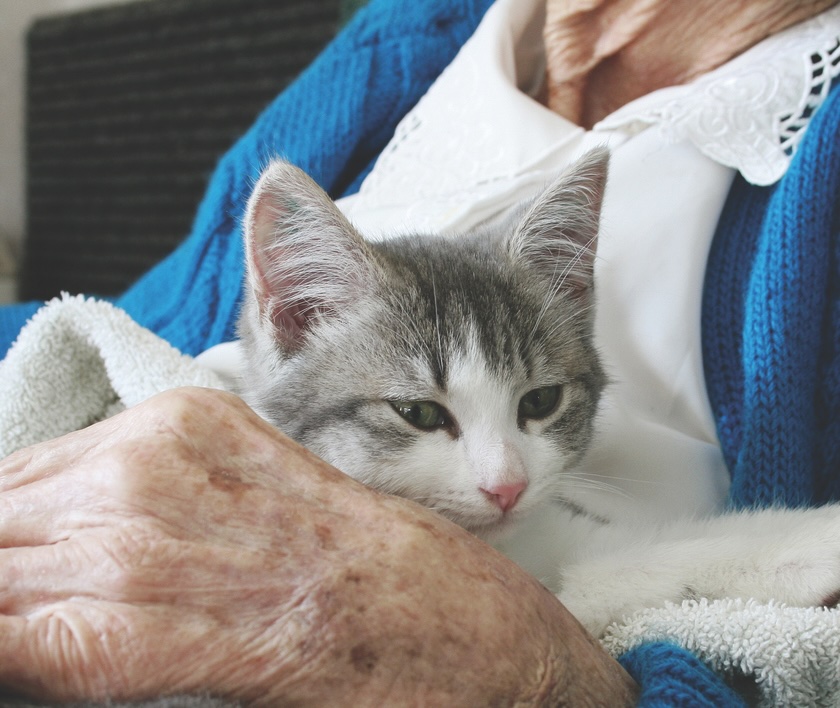
A study in Animals found that therapy cats share specific behavioral traits that may make them well-suited for animal-assisted services (AAS) programs. The study found that AAS cats tend to be more social with both humans and other cats, more attention-seeking, and more tolerant of being handled, particularly when it comes to being picked up, a behavior many pet owners would describe as rare in the feline world.
While animal-assisted services have long been dominated by dogs, the study suggests that expanding these programs to include cats could make therapy more accessible to a wider range of people. Some individuals may find comfort in a cat’s quiet presence rather than in the enthusiastic energy of a dog.
However, unlike dogs, therapy cats are not typically trained for the job. Instead, certain cats appear to naturally possess the necessary personality traits. Currently, therapy cats appear to be more common in Europe than in the United States. In Belgium, where the study was conducted, cats are becoming a more common presence in AAS programs, demonstrating their potential in stress-relief settings.
More work needs to be done, but with growing research and awareness, cats may soon find themselves sitting side-by-side with their canine counterparts, soaking up the attention and offering comfort in their own uniquely feline way. The researchers say that the goal of the study wasn’t to promote the use of cats in therapy work but to recognize that, at times, special cats may happily provide meaningful therapy and support to people who need it.ν
Delanoeije, J., et al. Behavioural Profile Differences Between Cats in Animal-Assisted Services (AAS) and Non-AAS Cats Using the Fe-BARQ in Flanders. Animals, 15(1), 33. https://doi.org/10.3390/ani15010033. Science Daily.