




Finding Forever Homes at End of Their Journey
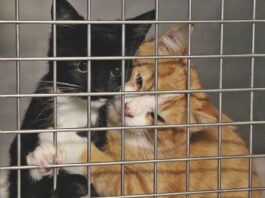
The Louisiana SPCA has found a novel solution to overpopulation at its New Orleans shelter. It sends dogs and cats to partner shelters miles away, where they can often be more quickly adopted. Its service is part of a small but growing trend in U.S. shelters and rescue organizations to save animals lives and find them forever homes.
Ask Elizabeth: June 2015
I recently adopted a beautiful kitty named Annie, and she has won my heart. Unfortunately after bringing Annie home, I discovered that she had some real neurological issues. She rocks back and forth and falls constantly when moving from room to room. Her veterinarian says that she has idiopathic [undetermined origin] vestibular syndrome. I do not think that she is going to get any better. Can you shed some light on this condition?

Ask Elizabeth: April 2015
I recently fostered a rescue dog I was told had eaten the feces of a feral cat while being housed in another foster home. This cat subsequently had his stool tested, and it came back positive for toxoplasma gondii. The dog unfortunately defecated in my car while I was transporting him and I am concerned that I may have been exposed to toxoplasma while cleaning up the mess in my car. Do I need to worry about this?

In The News: March 2015
Animal shelters in the U.S. take in 3.4 million cats annually and euthanize 1.3 million of them. Two shelter medicine programs have set out to save many of those lives with the launch of the Million Cat Challenge.The Koret Shelter Medicine Program at UC Davis, Maddies Shelter Medicine Program at the University of Florida and hundreds of animal shelters throughout North America want to challenge animal control facilities and private shelters to reduce euthanasia.

The Truth About Litter Box Aversion
Thinking outside the box has become a clich, but its still a praiseworthy trait. When your cat eliminates outside the litter box, however, its a problem. House soiling - urination or defecation any place other than in a litter box - is a major reason that owners surrender their cats to shelters. Cats dont avoid the box because theyre being spiteful. Theyre raising an alarm. Cats who eliminate outside the litter box are communicating to their owners that something is wrong, either with a specific aspect of their box, their health or relationship with another member of the household - feline or human, says Pamela Perry, DVM, Ph.D., a lecturer in animal behavior at Cornell University College of Veterinary Medicine. It is the most commonly reported feline behavior complaint to veterinary behaviorists.

How Outwit Your Wily Escape Artist
You open the door for an unexpected visitor and your cat flees. Its frustrating for you, potentially dangerous for your escape artist - and a possible sign that its time to add stimulation to his daily life.Cats adopted from a shelter may have been free roaming, with wide territories to explore, play and hide in. Now theyre confined at home to keep them safe from speeding cars and potential fights with stray cats and wildlife that can maim or kill, says Tracy Kroll, DVM, an animal behaviorist in Fair Lawn, N.J.

Theyre Giving Kittens a Chance at Life
Of all the animals in shelters, young kittens are usually the most at risk. Theyre fragile, prone to infectious illnesses and have special care needs. While some are placed in foster homes to be hand-raised until they are old enough for adoption, many shelters euthanize them as soon as they are brought in because they dont have the infrastructure or staff to care for them.

Five Reasons For The Behavior And The Techniques To Control It
Once physical and medical causes are ruled out, you may wish to consider some behavioral techniques to curb your cats excessive meowing. First, its important to determine the cause:

Ask Elizabeth: November 2014
Q. Our year-old male cat, found at a county animal shelter seven months ago, has been diagnosed with eosinophilic granuloma complex (EGC). His symptoms are incessant scratching, puffy gums, blistering mouth, swollen front paw, lameness, limping. Our veterinarian has prescribed steroids for him, and these have been somewhat helpful, but can you explain this disease so that we can better understand what is going on? …

Whats Your Cats Age in Human Years?
If there were an AARP for pets, your cat would get his membership card when he turns 8. Thats about 50 years old in human years, according to Feline Life Stage Guidelines from the American Association of Feline Practitioners and American Animal Hospital Association.

Most Cases of Deafness Are Acquired
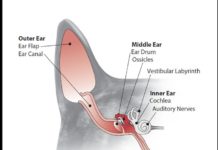
If your cat has become unresponsive to everyday sounds, squeaky toys or his name, if he doesnt know youre in the room unless you touch him, or if a loud noise fails to awaken him, a veterinary visit should be scheduled to determine if hes losing his hearing. Hearing is a vital sense for cats and greatly contributes to their self-preservation and comfort with us. Deafness in cats can be caused by a wide variety of conditions.

A Single Gene Keeps Mice Away From Cats
A specific gene affecting a mouse’s sense of smell helps it avoid predatory cats, according to research at Northwestern University. Neurobiologist Thomas Bozza, Ph.D., and his team found that removing an olfactory receptor responsible for detecting certain odors can impact a mouse’s survival. The gene, TAAR4, controls production of a receptor that detects a substance concentrated in carnivores’ urine. Usually, mice avoid the scent marks of predators, but those lacking the TAAR4 gene do not — and can end up as prey.