

Short Takes: 03/08
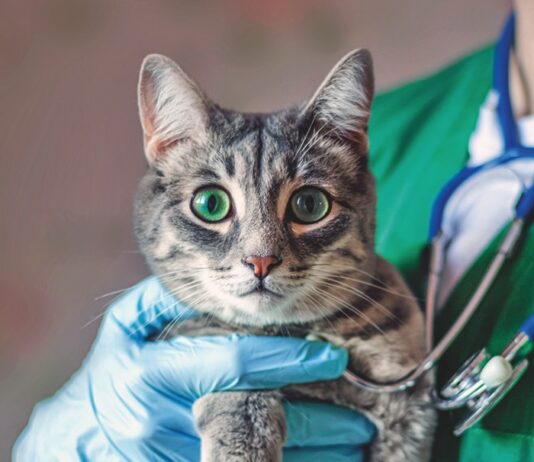
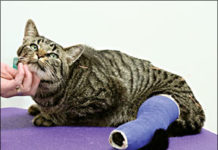
If statistics help you make difficult decisions, there are plenty of numbers in a Journal of the American Veterinary Medical Association (Vol. 231, No. 1) article, "Determining the optimal age for gonadectomy of dogs and cats." First the researchers compared benefits and risks of the surgeries. For example, spayed female cats incur an immediate 2.6 percent risk of surgical complications, [IMGCAP(1)]as well as a high risk of obesity, and less than a one percent risk of either FLUTD (feline lower urinary tract disease) or diabetes mellitus - all later in life. None of spayings possible outcomes causes what the researchers termed "substantial morbidity." That is, surgical complications from the spaying (called ovariohysterectomy or OHE) are hardly ever life-threatening.
Kidneys: Small Organs with Huge Responsibilities
Despite their relatively small size, your cats kidneys play a huge role in many life-sustaining processes.These two bean-shaped little organs - situated just behind the cats rib cage, one on either side of its spine - filter waste from the blood. In doing so, they also help control blood pressure and regulate the amount and chemical consistency of fluid in the bloodstream. In addition, they produce a variety of vitally needed hormones and enzymes and contribute to the production of red blood cells. Since about 25 percent of the blood that enters your cats circulatory system with each heartbeat travels directly to the kidneys, their well-being is essential to your cats health. Unfortunately, feline kidneys are vulnerable to a wide range of serious disorders. Indeed, kidney (renal) disease is a major cause severe illness and death in cats, especially after the age of seven years.
Diagnosis: Hypothermia
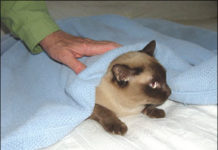
Cats whose breed developed in frigid areas of the world are likely to tolerate cold weather better than cats whose origins can be traced to more temperate regions. But even the fattest, furriest Maine coon will have only a slight edge over a trim, thin-coated Siamese when it comes to prolonged exposure to the biting winds, ice, snow and sleet that come with winter. Indeed, any cat that is left outside for extended periods of time when the temperature is below freezing-not to mention any poor creature that happens to tumble into an ice-cold pond-will be at risk for a potentially deadly drop in body temperature. The chances that this condition-called hypothermia-will prove fatal depends largely upon the animals age, overall physical condition and ability to regulate its body temperature, says Dr. Gretchen Schoeffler, chief of emergency and critical care services at the Cornell University Hospital for Animals.
Short Takes: 02/08
Veterinary science is finally taking a serious look at arthritis in cats, as reported in "Evaluation of Client-Specific Outcome Measures and Activity Monitoring to Measure Pain Relief in Cats with Osteoarthritis" (Journal of Veterinary Internal Medicine, Vol. 21, No. 3). Between 25 and 30 percent of older dogs suffer the pain and immobility of osteoarthritis. But veterinary medicine has neither an estimate of the occurrence in cats nor an approved means of pain relief. So researchers at the University of North Carolinas veterinary school asked 13 owners of older cats (between 10 and 19 years) to participate in an experiment. The cats were given complete exams, including X-rays of their legs, hips, paws and spines. To the owners surprise, virtually every cat in the study had several joints where osteoarthritis could be causing pain or restricting movement.
How Acupuncture Works
Three or four decades ago, few cat owners or veterinary practitioners in the U.S. knew anything whatsoever about acupuncture, the centuries-old Chinese system of health care that aims to treat physical disorders and their accompanying pain by inserting needles into specific points on a patients body. Today, thousands of veterinarians throughout the nation routinely practice acupuncture in their clinics, and countless cats are benefiting from it. "Im certainly an acupuncture advocate," says Andrea Looney, DVM, a lecturer in anesthesiology at the Cornell University Hospital for Animals. "I use it in treating between 10 percent and 20 percent of the patients that I see - not only cats, but dogs, horses and other animals as well." Dr. Looney stresses that she relies on acupuncture as a complementary technique, always using it in conjunction with the standard practices of Western veterinary medicine. "The fact that more veterinarians are skeptical and refuse to practice it," she says, "is a sad situation."

Feline Lymphatic Diseases
While casually petting your cat, you notice a small lump on its neck or behind one of its knees. What you may have discovered is a swollen lymph node. You dont have to be overly alarmed. The eruption is most likely a harmless and transient indication that the animal has a minor infection, and the swelling is likely to subside within a day or two. Nevertheless, youd do well to take your cat to your veterinarian for a checkup of its lymphatic system, the complex network of glands and tiny vessels that transport life-sustaining substances throughout its body. In some instances, a swollen lymph node may be a sign that the animal is harboring a potentially deadly disease.
Changing Your Cat’s Diet
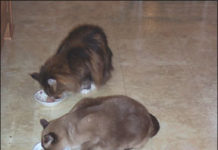
If switching your cats food is warranted, be sure to do it gradually. For any number of reasons, you may feel that your cat could do well with a change in diet. If thats the case, contact your cats veterinarian for advice. Find out if switching foods is indeed necessary and will truly benefit your animals overall health. If your veterinarian recommends a diet change, you should make the switch gradually so that the cats digestive system can properly adjust to the new food. "Its good to offer your cat a bit of variety within each meal," says Ilona Rodan, DVM, director of the Cat Care Clinic in Madison, WI. "You can accomplish that by mixing two foods that have different shapes and sizes, or by blending canned and dry food. That will help prevent the animal from becoming fixated on one specific type of food, which is important in case a diet change is needed for medical reasons later in the animals life." Otherwise, Dr. Rodan says, cats dont really need more variety than that, and change merely for the sake of change is unnecessary.
Short Takes: 01/08
The last time Frannie, the ShortTakes office feline, had her annual exam, we asked about heartworm control. The vet said that, as long as Frannie continued to be a strictly indoor cat living in this region (upstate New York), heartworm medication "probably isnt necessary." But ask again when Frannie comes back in six months, the vet added, "because things might change." We had been thinking about the late Dr. Jim Richards, an outspoken crusader for heartworm protection - no matter where in the 50 states a cat might live. All it takes is one mosquito, biting a heartworm-infected dog - then passing the disease on to the next cat it bites -to cause HARD (heartworm-associated respiratory disease), Dr. Richards said again and again.
Is Your Cat Really Hurting?
Pinch your finger in a car door, step on a nail or cut your thumb while peeling an onion, and youre apt to let out a holler that will alert everyone within hearing range to the fact that youre experiencing pain. And then youll spend the next week or two talking about that dreadful moment and its unpleasant consequences. Your cat is much different from you in that respect. Certainly, it can experience discomfort of varying intensity in its hard and soft tissues - its bones, joints, ligaments, muscles and internal organs. And it may howl for a moment when it senses sharp pain. But it certainly wont verbalize. It wont be able to point pathetically to a lacerated paw pad or an aching joint and say, "This is where it hurts!"
Help for Handicapped Cats
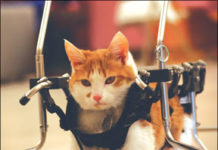
For four years, Kathy Barton, a fourth-grade teacher in Velma, Oklahoma, has engaged her class in a worthwhile project involving animals. This past year, she was introduced to a two-year-old male cat named Xavier that had been unable to walk since birth due to an undetermined neurological disorder. Barton knew where to turn for help for this cat, a place she had relied on before for animals like him. Barton contacted HandicappedPets.com, a website offering products, services and support for elderly, disabled and handicapped pets. Bartons class raised $700 to buy Xavier a quad cart - a mobile chair that helps disabled animals to get around.
Secondhand Smoke: Dangerous
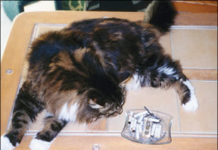
The American Lung Association defines secondhand smoke, also known as environmental tobacco smoke, as a mixture of the smoke exhaled from the lungs of smokers and the smoke that is given off by the burning end of a cigarette, pipe or cigar. These ambient fumes, which can linger in the air for hours after the source has been extinguished, will then be involuntarily inhaled by nonsmokers - with potentially deadly consequences.
X-Rays: An Indispensable Veterinary Tool
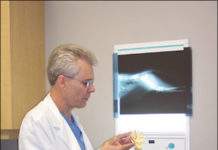
Although animals were used in the early 20th century to test the diagnostic potency of X-rays, the first-generation radiologists involved in those experiments could hardly have imagined a time when most veterinary clinics would be equipped with X-ray machinery and radiology would be a mainstay in the diagnosis of many feline physical disorders. It is difficult to pinpoint the time when X-rays came into widespread use among veterinarians, says Peter Scrivani, DVM. However, he points out, the American College of Veterinary Radiology was founded in 1961. "And thats about the time that the use of the technology by veterinarians really started to take off," says Dr. Scrivani, an assistant professor and director of veterinary diagnostic imaging at Cornell Universitys College of Veterinary Medicine.